











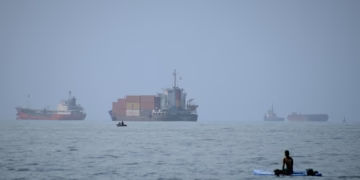






















































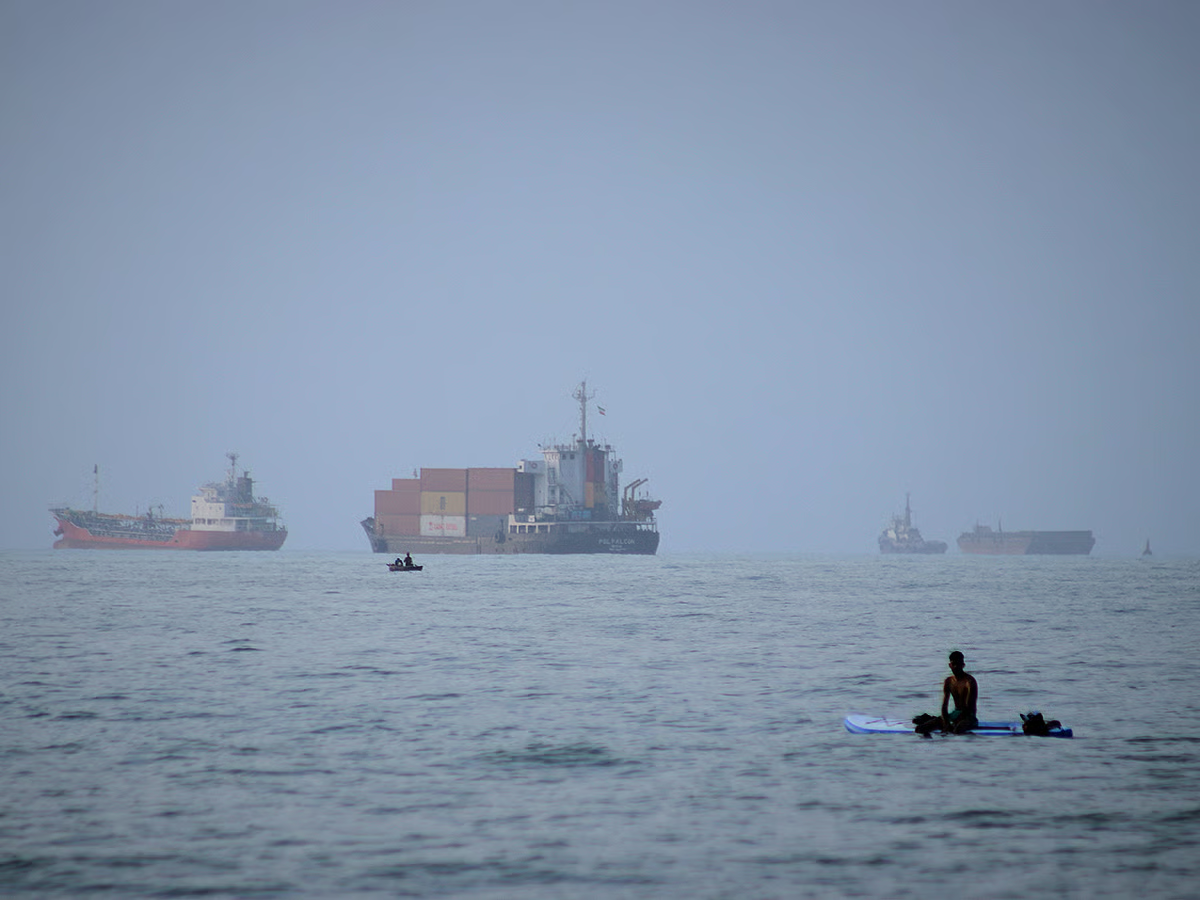
Oil markets are currently sending a contradictory signal: Brent crude is trading back around $90 a barrel even as investors continue to price in the possibility that the Strait of Hormuz could eventually reopen. This tension reflects a fundamental problem facing the global economy. While a diplomatic agreement could restore shipping through the world’s most important energy chokepoint, reopening the waterway would not instantly repair the supply chains damaged during months of disruption, according to a UBS report.
Brent crude briefly touched $90 on Tuesday and was trading around $88.91 at 7:51 a.m. on Wednesday, August 12, as hopes for a quick US-Iran agreement faded. While Brent had fallen below $80 earlier this month as investors anticipated an Iran-Oman arrangement, it subsequently climbed as the diplomatic picture became less certain. Iran has stated that a deal with Oman is close, but officials have stressed that an agreement alone would not necessarily lead to the immediate reopening of the Strait of Hormuz.
On Tuesday, Iranian Foreign Minister Abbas Araghchi met with Pakistan’s Interior Minister Mohsin Naqvi in Tehran as Islamabad steps up mediation efforts aimed at ending the ongoing conflict between Iran and the United States. According to Iran’s official IRNA news agency, the two officials discussed key diplomatic and bilateral issues, though no further details were provided. Tehran continues to demand significant changes in US policy, while Washington has resisted any arrangement that would leave Iran effectively controlling the waterway.
The latest move in prices above $90 is less a bet that the Strait will remain permanently closed than a warning that normalization could take much longer than markets initially hoped. That creates what economists sometimes call a “lagged supply shock.” UBS has revived its global supply-chain stress analysis during the Middle East conflict, having used a similar measure during the pandemic. Recent research indicated that supply-chain stress jumped sharply in the early months of the conflict, and while it has reported a decline from the peak, this does not mean the supply chain is back to normal; it only indicates that the rate of deterioration has eased.
Other measures tell a similar story. The New York Fed’s Global Supply Chain Pressure Index combines transportation and manufacturing data to assess global conditions. The Strait of Hormuz is not merely an oil pipeline at sea; the UN Conference on Trade and Development has warned that the disruption has consequences extending beyond energy markets into maritime transport and global supply chains. Shipping companies have faced higher fuel and insurance costs and have been forced to reroute vessels, while container freight rates have risen sharply during the crisis.
The biggest issue may be inventories. During a prolonged disruption, companies can survive by using stocks already in warehouses, storage tanks, and strategic reserves. However, once those inventories are drawn down, businesses need to replenish them. That creates a second wave of demand for shipping and commodities just as the transportation system is trying to normalize. So the economic impact can outlive the geopolitical event that caused it.
Reopening does not equal instant normalization. Energy remains the most visible component, as the Strait normally carries roughly one-fifth of global oil consumption and a major share of global LNG trade, making disruption there unusually consequential. Reuters has noted the waterway’s role in carrying roughly a fifth of global oil and LNG flows. Higher energy prices feed into virtually everything that moves, which is why a temporary energy shock can quickly become a broader inflation problem.
The market is currently caught between diplomatic optimism and physical reality. Iran and Oman have moved toward an arrangement, but Tehran says the waterway will not simply reopen without further conditions. Meanwhile, Washington’s position remains difficult to reconcile with Iran’s demands. That uncertainty persists, and even a successful agreement would not immediately erase the damage already done to global logistics.
The Strait can reopen in a day, but global supply chains cannot. That is the significance of the UBS stress indicator: it captures the economic aftershock that oil prices are beginning to reflect. As the conflict continues, the gap between political resolution and logistical recovery remains the primary driver of market volatility.
Oil spikes nearly 10% as US-Iran conflict escalates
Even after the physical bottleneck disappears, companies still have to
US-Iran war: What UAE residents need to know
US shows first-ever sea drone strike on Iran facility
Source: Gulf News