































































Two decades after the landmark United Nations study on violence against children, the global community is falling short of its 2030 Sustainable Development Goal commitments to eliminate such harm. A new progress report, set to be debated at the 81st session of the UN General Assembly this month, warns that the international community must accelerate collaborative efforts to ensure children can grow up in a secure, fear-free environment.
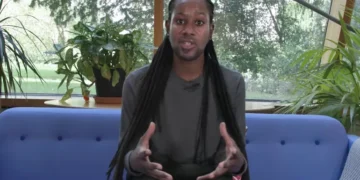
Dr. Najat Maalla M’jid, the Special Representative of the UN Secretary-General on Violence Against Children, authored the report following extensive engagement. Since assuming her role in July 2019, she has conducted 65 country-level visits, including five since her previous report, and is planning 10 additional visits for the remainder of 2026. Her outreach has involved consultations with 35 Heads of State or Government, 728 ministers and senior officials, and 96 municipal and local government representatives.
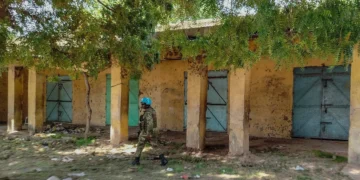
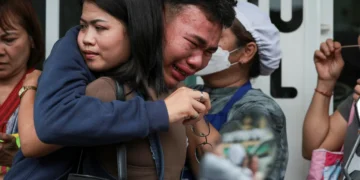
The findings highlight a troubling rise in violence, with nearly 19% of the world’s children now living in conflict zones, compared to 10% in the 1990s. By the end of 2024, approximately 50 million children were displaced due to violence and conflict, a figure that has nearly tripled since 2010. Furthermore, climate change and natural disasters have emerged as significant threat multipliers, leaving 1.1 billion children exposed to at least three overlapping climate hazards.
A major focus of the report is the rapid expansion of risks within the digital sphere. With one in three internet users being a child, digital technologies have become central to daily life. While these tools offer learning and social opportunities, they also facilitate sexual exploitation, cyberbullying, harmful content, and privacy violations. The report notes that over 300 million children annually fall victim to online sexual exploitation and abuse. Additionally, at least 1.2 million children reported having their images manipulated into sexually explicit deepfakes using artificial intelligence over the past year.
Data from a 2025 poll of over 30,000 children across all regions underscores these concerns, with 66% of respondents indicating they believe cyberbullying is on the rise. Beyond the immediate physical and psychological impact, the global economic burden is significant, with the loss of human capital linked to children’s mental health conditions estimated at $393 billion annually.
To address these challenges, the Special Representative has called for a comprehensive strategy centered on prevention, protection, participation, and accountability. Key recommendations include the development of national protection strategies, the legal prohibition of all forms of violence, increased investment in child protection systems, and the active inclusion of children in decision-making processes that impact their lives. The report also notes that the UN said that 20 years after the publication of the United Nations study on violence against children and with fewer than four years remaining to achieve the Sustainable Development Goals, the world is not on track to. The report also notes that najat Maalla M’jid, Special Representative of the United Nations Secretary-General on Violence Against Children, which will be submitted to the 81st session of the UN General Assembly (UNGA 81 Meetings) this month for de. The report also notes that the Special Representative has undertaken 65 visits at the country level to engage with national authorities in Member States, including 5 since her last report, the report said that since taking up her role in July 2019. The report also notes that today, 1 in 3 Internet users is a child and digital technologies have become an integral part of children’s daily lives.
Source: Gulf Today