








































Nearly six months into the conflict between the United States, Israel, and Iran, Washington is shifting its tactical focus. Following months of missile exchanges that have failed to produce a decisive outcome, the US Treasury has pivoted toward a strategy of aggressive financial isolation, dubbed “Operation Economic Outcast.”
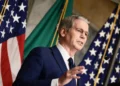
US Treasury Secretary Scott Bessent announced the initiative on Monday, characterizing it as “the single greatest financial offensive ever” launched against Tehran. Describing the move as an “economic D-Day,” Bessent warned that the US would impose penalties on any banks or businesses that continue to facilitate trade with Iran. “No one is above the reach of US sanctions,” he stated, emphasizing that Tehran’s trading partners face the threat of secondary sanctions if they persist in helping convert Iranian oil into revenue.
The Treasury has already moved to enforce these measures, sanctioning 60 entities, individuals, and vessels across the United Arab Emirates, Hong Kong, China, Singapore, and Switzerland, all accused of supporting Iranian trade networks. This escalation comes as the disruption of energy exports through the Strait of Hormuz—a vital artery for one-fifth of the world’s oil and gas—has caused domestic gas prices to spike in the United States, adding political pressure on the current administration.
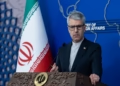
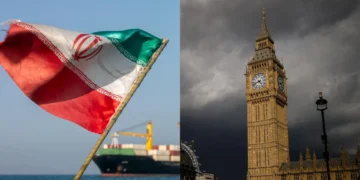
The strategy has drawn a sharp rebuke from Iranian officials. Mohsen Rezaei, Secretary of the Supreme National Security Council, warned last week that if any neighboring countries join the American economic campaign, Iran would ensure that “not a drop of oil will leave the Persian Gulf and the strait of Hormuz.”
For Gulf states, the situation presents a precarious paradox. While the US military presence provides a necessary shield against Iranian missiles and drones, the shift toward economic warfare threatens to provoke further regional instability. Analysts suggest that while Gulf nations might prefer financial pressure over continued missile strikes, they remain wary of being caught in the crossfire of a prolonged economic conflict.
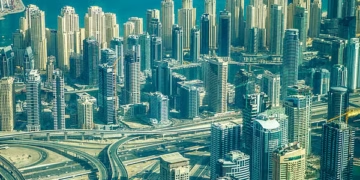
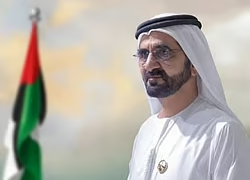
The response among Gulf neighbors has been varied. The United Arab Emirates has taken the most decisive step, announcing last week that it is ending trade with Iran. Simon Mabon, a professor of international relations at Lancaster University, noted that the UAE’s stance is driven by its status as a signatory to the US-led Abraham Accords and its recent experience of being “furious with Iran” after taking a “beating” during the conflict. Miad Maleki of the Foundation for Defense of Democracies added that a full UAE cutoff is significant, given Dubai’s long-standing role as a key gateway for Iranian foreign currency and imports.
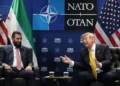
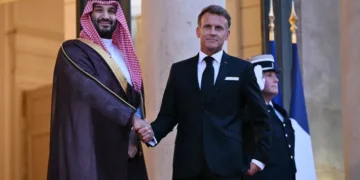
In contrast, other regional powers like Saudi Arabia, Qatar, and Oman appear more hesitant. Saudi Crown Prince Mohammed bin Salman has pursued a pragmatic approach in recent years, which led to the restoration of diplomatic ties with Tehran in 2023 via a China-brokered deal. While Riyadh may desire a weakened Iran, it is reportedly cautious about the potential for total state collapse and the resulting regional chaos. Rashid al-Mohannad of the Doha-based Center for International Policy Research noted that recent diplomatic visits, such as the Omani foreign minister’s trip to Tehran, suggest a continued desire among mediators to de-escalate.
Skeptics, however, view the new US sanctions as largely performative. Iranian political analyst Mostafa Khoshcheschm dismissed the announcement as a “political show” designed to intimidate neighbors. He compared the current campaign to the “maximum pressure” policy of the first Trump administration, which ultimately failed to force a renegotiation of the JCPOA and resulted in a US withdrawal from the agreement in 2018. Khoshcheschm argued that the current measures are “even weaker” than those previous efforts.
Despite the skepticism, Washington maintains that its strategy is effective. Trita Parsi, executive vice president of the Quincy Institute for Responsible Statecraft, suggests that the US believes the rerouting of maritime traffic through Oman and a broader global shift away from Gulf oil have diminished Iran’s leverage. From Washington’s perspective, the status quo imposes higher costs on Tehran than on the US, leading to a belief that time is now on their side.
Ultimately, the success of this economic offensive may depend on whether major global economies—specifically China, Russia, and India—comply with US demands. For the Gulf states, the path forward remains narrow. They are expected to continue advocating for “dialogue and diplomacy” to avoid becoming a gateway to further regional instability, even as they navigate the mounting pressure to align with Washington’s latest financial campaign. The report also notes that gulf states have repeatedly found themselves caught in the crosshairs during the US-Iran war as Iran has targeted US military assets and infrastructure in neighbouring countries. The report also notes that in peacetime, one-fifth of the world’s oil and natural gas is shipped by Gulf producers through the critical waterway, which has become the main bone of contention in the war since Iran effectively closed it to shipping at the start of the war. The report also notes that the latest wave will target five of Iran’s most important remaining economic lifelines: digital assets, technology, gold, aviation and shipping, while the US and other countries have sanctioned Iran’s oil and financial sectors for decades. The report also notes that meanwhile, US media reports that supplies of missiles and air defence interceptors in the Middle East may be running low – vehemently denied by the Trump administration – have incentivised Washington to pursue other means of pressuring Tehran, observers say. The report also notes that he said, has led Trump to believe Washington can afford to wait Tehran out and that, for the first time since the war began, “time is working in America’s favour”, that calculation.
Source: Al Jazeera