




















































Lebanese Prime Minister Nawaf Salam has formally requested a definitive timetable for the withdrawal of Israeli forces from Lebanese territory. This push comes amid intensifying domestic criticism from Hezbollah, whose leadership has accused the Lebanese government of compromising the national army’s integrity by engaging in current diplomatic efforts.
On Friday, the prime minister’s office released a statement detailing meetings between Salam, United States Ambassador to Beirut Michel Issa, and General Joseph Clearfield, who leads the US military coordination group for Lebanon. The discussions focused on the military framework for negotiations and the deteriorating security situation in the southern regions of the country.
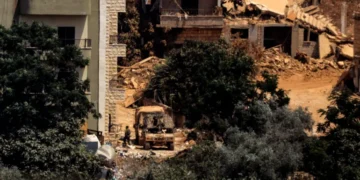
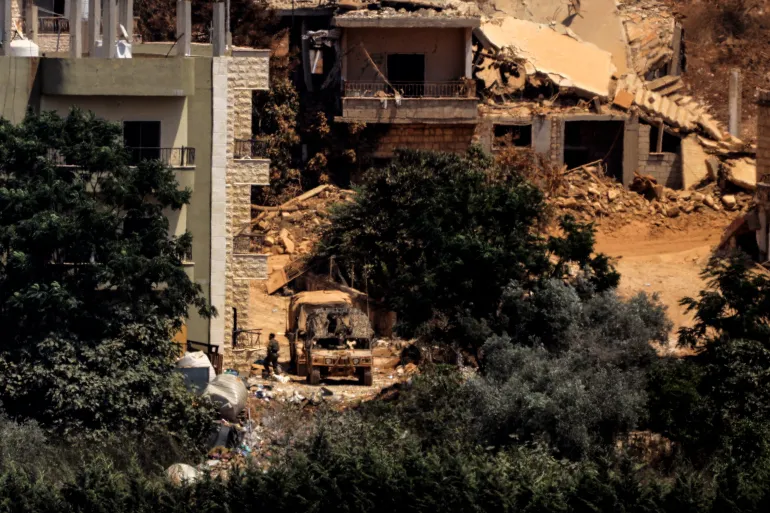
During these talks, Salam emphasized the urgent need for Israel to cease its destruction operations and establish a concrete schedule for exiting Lebanese lands. Parliament Speaker Nabih Berri held separate discussions with the same US officials, asserting that Israel continues to violate Lebanese sovereignty through village demolitions, the burning of forests, and the destruction of heritage sites and farmland.
Berri maintained that the only path to regional stability is forcing Israel to end its military campaign and retreat to the internationally recognized border. While Ambassador Issa described the ongoing dialogue as positive, he did not provide a specific date for the next round of negotiations, which are expected to resume in early September.
Hezbollah leader Naim Qassem strongly criticized the government’s approach on Friday, questioning the value of the seven rounds of talks held thus far. He alleged that officials are placing the Lebanese army under undue pressure by attempting to implement a flawed agreement that exposes the force to bombardment and Israeli influence.
Qassem specifically pointed to ongoing strikes in Zawtar al-Gharbiyeh, a designated pilot zone, as evidence that the current framework fails to protect Lebanese territory. He accused Israel of attempting to establish an oversight body that would restrict the army’s internal operations and deployment capabilities.
The diplomatic deadlock remains significant, as the US-backed trilateral framework requires the disarmament of Hezbollah and a gradual Israeli withdrawal. Ambassador Issa reiterated the US position to reporters, stating that Israeli military actions would only cease if Hezbollah agrees to disarm. “If they give up their weapons, everything will stop,” he said.
Israeli Defence Minister Israel Katz confirmed on Thursday that there will be no withdrawal until Hezbollah is fully disarmed. Currently, Israeli forces maintain an occupation of several towns within the Lebanese border, continuing a campaign that has resulted in widespread displacement and structural damage.
The human cost of the conflict remains severe. According to official Lebanese data, Israeli military operations since March 2 have resulted in 4,335 deaths and 12,277 injuries, while more than one million people have been displaced from their homes.
“How can you accept this ongoing humiliation of the Lebanese army, exposing it to bombardment and Israeli pressures, instead of acting as its protectors?” Qassem said on Friday.
Source: Aljazeera