










































Last month, US Secretary of State Marco Rubio announced that Washington was stepping up efforts to “dismantle” the International Criminal Court (ICC), including by expanding the use of sanctions and pressuring the court’s member countries to withdraw. This aggressive stance represents a significant escalation in the ongoing conflict between the United States and the international judicial body.
The White House action falls into a clear, established pattern: ever since the start of Israel’s genocidal war in Palestine, individuals and institutions involved in documenting war crimes and prosecuting the accused have been systematically targeted by the US government. This strategy of intimidation aims to shield allies from international legal scrutiny.
To date, the US administration has used Executive Order 1420 to sanction ICC prosecutors, eight ICC judges, the UN Special Rapporteur on the Occupied Palestinian Territory, and three leading Palestinian human rights groups. These measures are designed to obstruct the court’s ability to function and to discourage cooperation with its investigations.
Those targeted by these sanctions have faced severe personal and professional consequences, including having bank accounts frozen or closed, financial transactions rejected, digital services cut off, and international travel restricted. These punitive measures have effectively created a climate of fear for those working within the international justice system.
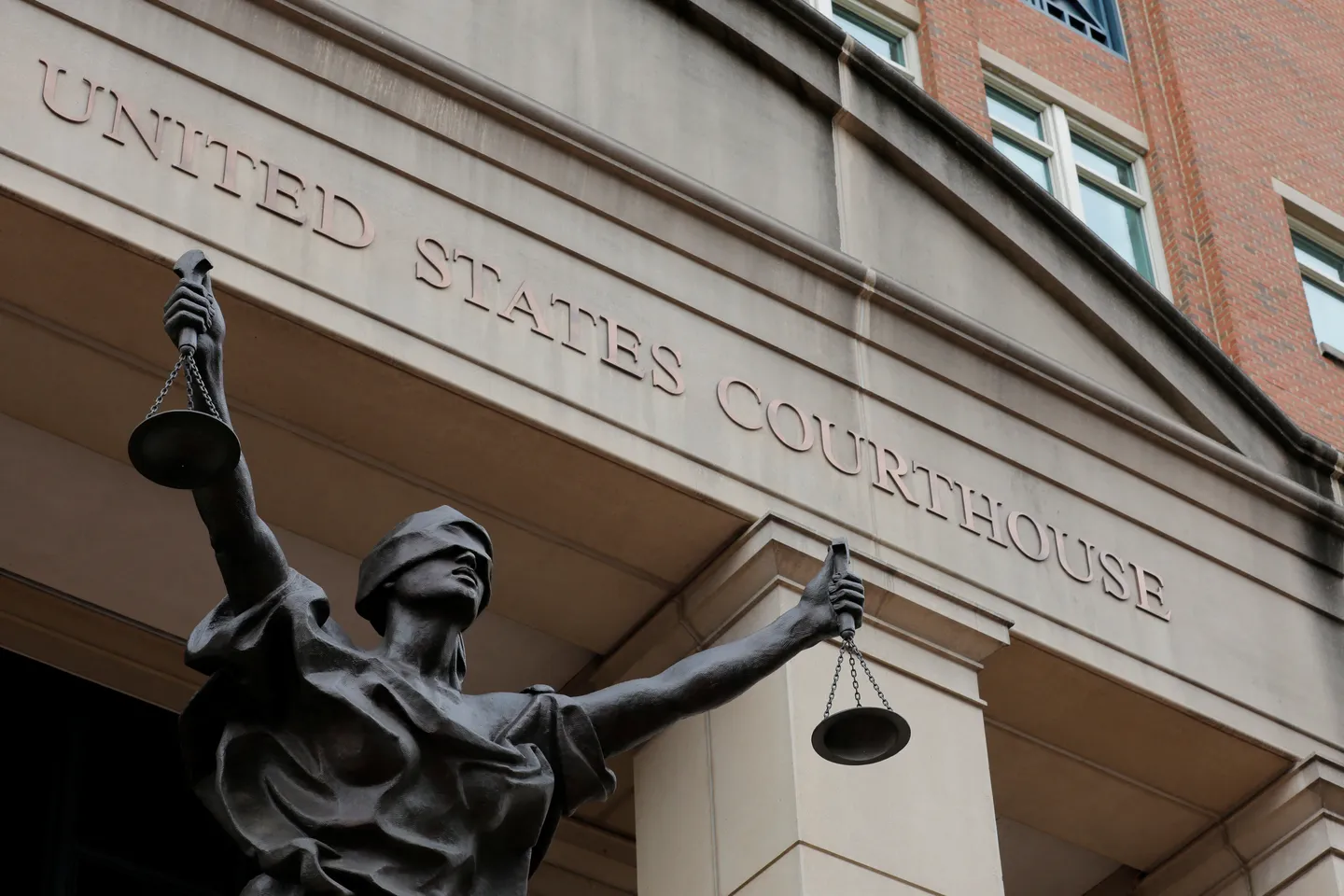
That pressure campaign now faces its most direct legal challenge yet. On Tuesday, four major US human rights groups—Human Rights Watch, the Centre for Constitutional Rights, the American Friends Service Committee, and the Open Society Institute—sued the US administration over the sanctions, arguing they are unconstitutional and exceed presidential authority.
The plaintiffs argue that the same reasoning that led courts to find sanctions against lawyers and rights defenders unconstitutional under the First Amendment should apply to these measures. Their complaint also argues the order is built on a manufactured “national emergency” that does not survive scrutiny under US sanctions law.
“Our lawsuit is seeking to put an end to the sanctions regime as a whole,” says Elizabeth Evenson, international justice director at Human Rights Watch. The groups aim to challenge the administration’s ability to use economic warfare as a tool to bypass international law and protect alleged war criminals from accountability.
“We are asking the court to stop the US administration from enforcing the sanctions already in place and to prevent it from issuing any additional sanctions,” Evenson tells. The legal team is seeking an immediate injunction to halt the ongoing harm caused by these executive actions.
“We aim to make sure that the ICC and all those working with it can do so without fear of reprisal,” she adds. The lawsuit emphasizes that the independence of the court is essential for the global rule of law and that governments should not be permitted to weaponize sanctions to undermine judicial integrity.
Washington has long argued that the ICC’s investigation of American citizens violates US sovereignty because it does not recognise the court’s jurisdiction over its nationals. However, critics note that US citizens accused of crimes committed abroad can already face prosecution in the countries where those crimes occurred, in line with established principles of international law.
The impact of these sanctions has been profound. In 2025, UN Special Rapporteur Francesca Albanese was sanctioned by Washington just days after publishing a report detailing how dozens of corporations, including Amazon, Microsoft, Alphabet, and Palantir, were enabling and profiting from Israel’s occupation. Albanese lost her US bank account and her only apartment after being accused of “biased and malicious activities” for simply fulfilling her mandate.
Similarly, Chief Prosecutor Karim Khan, who opened the Gaza investigation and sought an arrest warrant for Benjamin Netanyahu, was forced to step aside in May 2025 amid a misconduct allegation. Although Khan was cleared of any wrongdoing by an ICC judicial panel in March 2026, a bureau of member states voted to disregard that finding and removed him anyway.
The intimidation has been explicit. Khan later revealed that US senators threatened him directly regarding his pursuit of justice. “Twelve senators wrote, and they said, ‘If you target Israel, we will target you and your family. You have been warned.’ That’s almost a verbatim quotation,” Khan stated during a public disclosure.
Despite these threats, there have been minor legal victories. In May 2026, a federal judge in Washington blocked sanctions against Albanese outright, finding that her ICC recommendations were nothing more than protected speech with no binding effect on the court. Rights groups hope this precedent will bolster their current challenge.
Evenson remains firm that the international community must act. “They can stand together and make clear that they support the ICC’s work, and that they will work together to protect the court’s independence,” she tells. The outcome of this lawsuit will likely determine whether the US can continue to use its financial power to insulate itself and its allies from the reach of international justice.
In September 2025, three of Palestine’s most prominent human rights groups; Al-Haq, the Palestinian Centre for Human Rights, and Al-Mezan, were also sanctioned for supplying the ICC with the testimonies, forensic data, a
But Washington’s intimidation failed to silence anyone documenting or prosecuting Israel’s war crimes in Gaza, where the Palestinian death toll has passed 75,000 since October 2023.
“It is an affront to all victims and survivors of war crimes and genocide.”
In September 2025, three of Palestine’s most prominent human rights groups; Al-Haq, the Palestinian Centre for Human Rights, and Al-Mezan, were also sanctioned for supplying the ICC with the testimonies, forensic data, and casualty records their teams have compiled for decades, material that helped underpin the arrest warrants against Netanyahu and Gallant.
The US “seeks to intimidate human rights defenders and deter people of conscience from advocating for the rights and dignity of others,” Ajlouny adds.
“They betray historic US leadership in the cause of international justice and are a slap in the face to victims and survivors of grave crimes everywhere who depend on the ICC as a court of last resort,” Goldston adds.
In 2020, the US administration sanctioned senior ICC officials, including then Chief Prosecutor Fatou Bensouda, after the court announced it would investigate war crimes by US forces in Afghanistan and Israeli forces in the occupied Palestinian territories.
Bensouda had reportedly received direct threats from Israeli intelligence officials warning her against pursuing cases that could put her or her family at risk.
The US then froze her assets and barred her from entering the country.
“The fact that so many leading human rights and humanitarian organisations have come together to challenge Trump’s unlawful executive order demonstrates the widespread harm it is causing across civil society groups dedicated to bringing those responsible for grave crimes to justice,” says lead counsel Andrew Loewenstein of Foley Hoag LLP.
If they win, it would be the first ruling to challenge the sanctions structure as a whole, rather than carving out exceptions one name at a time.
Source: TRT World