









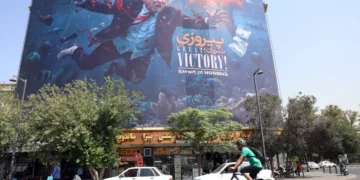








































Negotiations aimed at securing a peace deal between the United States and Iran have hit a significant impasse, primarily centered on the ongoing standoff in the Strait of Hormuz. Despite assertions from Washington regarding the status of the vital waterway, Tehran continues to reject claims that it has lost control over the region.
On Wednesday, US President Donald Trump reiterated his position that the United States maintains “total control” over the critical maritime passage. This declaration was met with sharp rebukes from Iranian officials, who maintain that the strait will remain closed until their demands concerning US aggression, financial reparations, and existing sanctions are addressed.
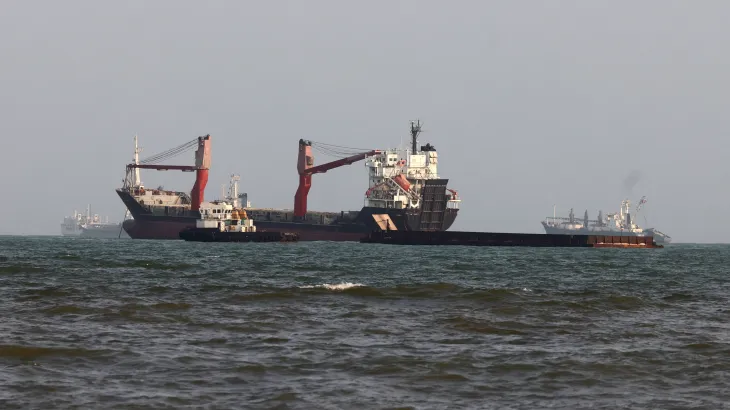
The Persian Gulf Strait Authority (PGSA) issued a statement on X on Wednesday, dismissing US claims that the blockade has been lifted. The authority emphasized that the reality on the ground remains unchanged, asserting that the strait will stay restricted until Iran’s specific conditions are met. Although the US claims authority, shipping traffic through the waterway has fallen to a one-week low due to the Iranian blockade.
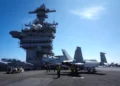
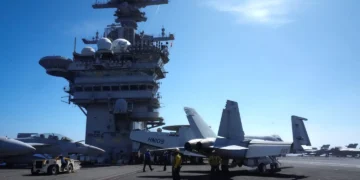
The maritime situation is further complicated by US naval operations near Iranian ports. On Tuesday, US forces intercepted a Panama-flagged vessel in the Gulf of Oman, alleging the ship failed to respond to warnings while heading toward an Iranian port. This follows a broader pattern of friction, as the US continues to enforce a naval blockade in the vicinity.
Iranian Foreign Minister Abbas Araghchi criticized Washington’s approach on Thursday, suggesting that the US has suffered from long-standing intelligence failures, including those related to the joint US-Israel military strikes on Tehran on February 28. Araghchi dismissed the US actions in the strait as a significant miscalculation, stating that “worse than fake news is fake intelligence.”
Hojjatoleslam Hossein Taeb, commander of the Basij Organisation, an affiliate of the Islamic Revolutionary Guard Corps (IRGC), echoed these sentiments, asserting that the strait is under the firm management of the Islamic Republic. He claimed that the country continues to operate with complete security, adding that the Americans have witnessed the power of the Islamic revolution.
The current diplomatic landscape is complex, as Iran refuses direct talks with the US, citing a breach of the June 17 memorandum of understanding (MoU) due to renewed US strikes in July. Instead, Tehran is engaging in discussions with Oman regarding the future management of the strait. These talks aim to establish secure shipping lanes that respect sovereign rights while addressing national security concerns for both Iran and Oman.
Qatar’s Foreign Ministry spokesperson, Majed al-Ansari, noted on Tuesday that these negotiations have reached an advanced stage. Meanwhile, Pakistan has also entered the diplomatic fray; Interior Minister Mohsin Naqvi visited Tehran this week to discuss potential mediation efforts to bring the US and Iran back to the negotiating table.
The current deadlock follows a series of failed attempts to stabilize the region. In April, US Vice President JD Vance and Iranian Parliament Speaker Mohammad Bagher Ghalibaf held face-to-face talks in Islamabad. Although a remote MoU was signed on June 17 to initiate a 60-day negotiation period, disagreements over shipping routes, fees, and security protocols caused the process to collapse.
Analysts suggest that the path forward remains uncertain. Alan Eyre of the Middle East Institute noted that the only substantive negotiations currently occurring are those between Iran and Oman. Negar Mortazavi, a fellow at the Center for International Policy, warned that if both sides fail to compromise, the conflict could evolve into a prolonged, open-ended regional crisis.
The humanitarian context of the conflict remains a point of contention. President Trump recently stated his administration intends to seek payment for 50 years of alleged damage caused by Iran, citing the deaths of US forces and civilian protesters. Trump claimed 52,000 people have been killed in Iran over the last four months. In contrast, Tehran reports that 3,117 people died during anti-government protests in January, while the US-based Human Rights Activists News Agency (HRANA) reported approximately 7,000 deaths in February, including 6,500 protesters.
As the standoff persists, the Strait of Hormuz—a conduit for one-fifth of global oil and liquefied natural gas supplies during peacetime—remains a central obstacle to broader peace. Iran’s Supreme National Security Council has recently outlined new conditions that must be fulfilled before the blockade can be fully addressed.
On Thursday, Iran’s Foreign Minister Abbas Araghchi said the US “has long miscalculated due to intelligence failures”, including when launching its war on Iran, which it did alongside Israel with strikes on Tehran on Feb
Following the signing of a memorandum of understanding between Iran and the US on June 17, under which Iran undertook to keep the strait open for 60 days, there were soon disagreements about control of the waterway and t
Iran fired on some ships it said had not followed its permitted route, leading to a renewal of hostilities with the US.
Iranian forces are currently preventing ships that do not have its express approval from navigating through the narrow strait, which passes through territorial waters of Iran and Oman.
Iran says it is not talking directly to the US about the strait.
Following the signing of a memorandum of understanding between Iran and the US on June 17, under which Iran undertook to keep the strait open for 60 days, there were soon disagreements about control of the waterway and the routes that ships should take.
As a result, the strait – which was fully and freely open to all shipping before the US launched its war on Iran – has become the main obstacle to the progression of wider peace talks.
Iran says it is not speaking directly to the US because it has violated the June 17 MoU by restarting strikes on Iran in July.
On June 17, the two sides remotely signed the MoU, which was supposed to kick-start a 60-day negotiation process.
However, various disagreements prevented that process from getting off the ground, and talks have stalled since then.
Iran says it is not worth talking directly because it “can’t count on anything the US says”, Eyre said.
Commenting on the possibility of future talks between the longtime foes, Negar Mortazavi, senior fellow at the US-based Center for International Policy, said the key question is whether the escalatory rhetoric from both sides is “opening negotiating positions or actual red lines”.
The six conditions include an end to US threats against Iran and insults to what Zolghadr described as the country’s national and religious values; a permanent end to attacks against Iran and its allies in Lebanon, Palestine, Yemen and Iraq; the lifting of the US naval blockade and withdrawal of naval and air forces from around Iran; compensation for damage from what he called two “imposed wars”; the lifting of
sanctions; and the unconditional release of frozen Iranian assets.
Trump told reporters at the White House on Monday that his administration was going to seek payment for “50 years” of damage caused by Iran, framing the move as a direct response to Tehran’s claims.
Tehran says some 3,117 people died in antigovernment protests that swept the country in January, prior to the launch of the US-Israel war.
On Thursday, Al Jazeera’s Tohid Assidi reported, citing observers, that Iran is focused on two primary issues.
“First was the security assurances Iran sought, ensuring that a reached deal could pave the way for a period of stability in the country,” Assidi said.
“Second were economic concerns, primarily articulated in demands for the US naval blockade to be removed and sanctions frozen, which represented the key demands coming from the Iranian side,” he added.
Despite the rhetoric from Trump, analysts have told Al Jazeera that the US may have to concede to some of Iran’s demands as it faces growing pressure domestically to avoid another escalation.
The US media have reported that concerns over dwindling defensive munitions have contributed to Trump’s decision not to carry out his threatened large-scale strikes against Iran.
Source: Aljazeera