




















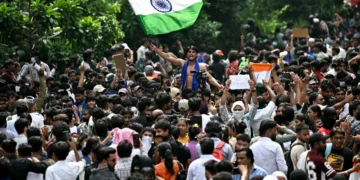




























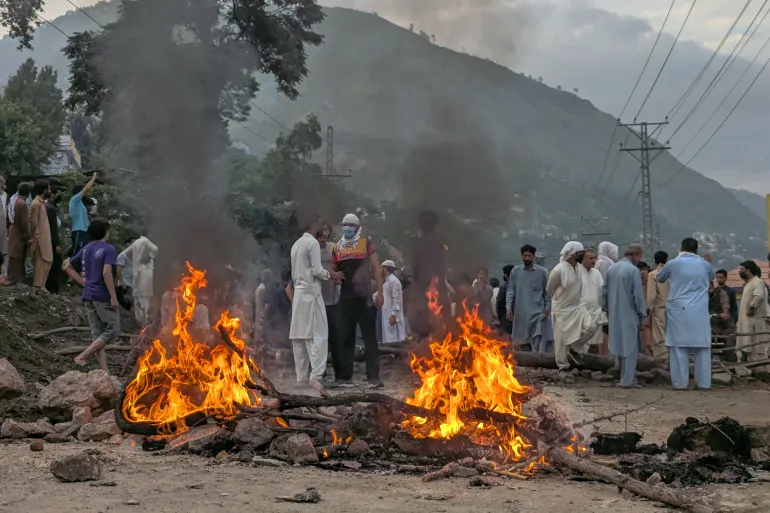
Pakistan-administered Kashmir is currently navigating its most severe political crisis in years, following weeks of demonstrations demanding electoral reforms that have resulted in significant loss of life. The region, which comprises Azad Jammu and Kashmir (AJK) and Gilgit-Baltistan, has been gripped by unrest that forced authorities to implement a staggered three-phase election schedule. The second round of voting took place on Sunday, occurring under a partial internet blackout and amidst widespread calls for a boycott by local activists.
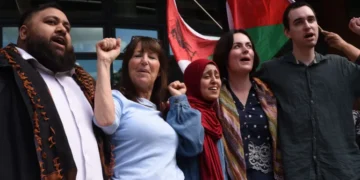
The protests are spearheaded by the Jammu and Kashmir Joint Awami Action Committee (JAAC), a coalition of civil society groups, lawyers, and traders. The group is advocating for substantial changes to electoral laws and increased economic concessions. The epicenter of this movement is Rawalakot, the headquarters of the Poonch division in AJK. The region maintains its own legislature, though it is not a full-fledged province within Pakistan due to the ongoing territorial dispute over the broader Kashmir region.
Muzaffarabad, the capital of AJK, is located approximately 30km (18.5 miles) from the Line of Control, the de facto border dividing Kashmir between Pakistan and India. While the protests gained significant momentum in June, their foundation was laid in May 2026, when negotiations between the JAAC and the government in Muzaffarabad collapsed over demands to abolish 12 legislative seats reserved for Kashmiri refugees who migrated to Pakistan after 1947.
The JAAC argues that these reserved seats allow Pakistan-based political parties to exert undue influence over the local government, effectively undermining regional representation. Conversely, the AJK Supreme Court ruled on June 7 that these seats are constitutionally protected and cannot be abolished without a constitutional amendment. PPP chairman Bilawal Bhutto Zardari has stated that 35 of the 38 demands put forth by the JAAC have already been implemented, asserting that the remaining proposals are either unfeasible or blocked by existing court rulings.
The human cost of the unrest has been severe. While official figures remain unreleased, residents and local estimates indicate that the death toll has surpassed 50, including seven law enforcement personnel. Protest leaders claim that more than 60 civilians have died in less than two months. Furthermore, Amnesty International reported on July 28 that at least 40 people have been killed, including 34 protesters and six police and paramilitary personnel, and has demanded a transparent investigation into the use of force.
The government’s response has been characterized by both security measures and rhetoric. On June 5, authorities designated the JAAC a proscribed organisation under the Azad Jammu and Kashmir Anti-Terrorism Act of 2014. Simultaneously, internet and mobile services were suspended across the region. Officials advised nonresidents not to travel to AJK between June 5 and June 20, while urging tourists already in the area to depart immediately.
Lieutenant-General Ahmed Sharif Chaudhry, director-general of Pakistan’s Inter-Services Public Relations (ISPR), stated during a news conference that “Kashmiris hold a special place in Pakistan’s heart.” He accused vested interests of fueling the unrest and asserted that the state maintains the sole authority to use force, labeling violence by any group as unacceptable. He also rejected allegations of state overreach, though he did not address the specific number of civilian casualties during his briefing.
The timeline of the crisis shows a rapid escalation. On June 8, violent clashes erupted between protesters and security forces in Rawalakot and surrounding areas. By June 9, the JAAC called for a regionwide general strike, leading to the closure of markets, schools, and public transport. Federal paramilitary forces were subsequently deployed across the region to maintain order as the death toll continued to climb throughout mid-June.
Information regarding the situation remains difficult to verify. According to NetBlocks, an independent observer, a partial internet blackout has been in effect since June 5. The fact-checking wing at the Center of Excellence in Journalism (CEJ) in Karachi, known as iVerify, confirms that telecommunications remain limited and internet connectivity is sparse throughout AJK. This environment has allowed viral videos and images—some claiming to show staged injuries or fake police shootings—to circulate widely, complicating the public understanding of the events.
The electoral process has been heavily impacted by these conditions. On July 21, the AJK Election Commission announced a revised three-phase schedule in response to the ongoing unrest. The first phase of voting was held on July 27 in the Mirpur division, with early results favoring Prime Minister Shehbaz Sharif’s party. The second round occurred on August 2 in the Muzaffarabad division, marked by boycott calls and restricted communications.
The third and final round of voting is scheduled for August 10. Despite the government’s efforts to proceed with the elections, the JAAC continues to accuse Islamabad of using the refugee seats to manipulate local politics. The movement insists that their struggle is for greater political rights and an end to policies they believe systematically undermine the autonomy of the region.
As the final phase of the election approaches, the situation in Pakistan-administered Kashmir remains volatile. The combination of a communications blackout, the deployment of paramilitary forces, and the ongoing legal and political impasse suggests that the region will continue to face significant instability even after the electoral process concludes. Observers remain concerned about the potential for further violence and the long-term implications of the government’s handling of the JAAC’s demands.
New Delhi has rejected the allegation.
He said the government was exercising “wisdom and restraint” in maintaining peace and stability.
Regional authorities and local media report that 11 people are killed and several injured, including protesters and security personnel.
On the same day, thousands join a JAAC-led march from Rawalakot towards Muzaffarabad.
No, the protests are being held against the reservation of 12 seats in Pakistan-administered Kashmir’s legislature for refugees from Indian-administered Kashmir who now live in other parts of Pakistan.
The Jammu and Kashmir Joint Awami Action Committee (JKJAAC), commonly known as JAAC, is a grassroots coalition of civil society groups, traders, lawyers and activists formed in 2023 in the AJK area of Pakistan-administered Kashmir.
Rather than being led by a single figure, the JAAC operates as a coalition with several spokespeople, including Shaukat Nawaz Mir, Sardar Umar Nazir, Khawaja Mehran Arshad and Sardar Aman Khan.
Following the ban, authorities placed all four spokespeople on a wanted list, offering a reward of 10 million Pakistani rupees ($36,000) for information leading to their arrests.
The JAAC first staged a protest in May 2023 against soaring electricity bills, alleged smuggling of flour and shortages of subsidised wheat.
The movement reached its first major flashpoint in May 2024, when protesters marched towards Muzaffarabad.
In September and October 2025, the JAAC unveiled a 38-point charter of demands and launched a regionwide shutdown, prompting authorities to impose a communications blackout.
The charter remains at the centre of the current unrest.
Its demands include economic subsidies, investigations into alleged corruption, improved social services and infrastructure, and the abolition of the 12 reserved assembly seats.
Fact-checkers at iVerify Pakistan have confirmed some visuals as authentic while debunking others as AI-generated or recycled footage.
Road blockades have also cut off towns, disrupting travel, work and access to healthcare.
Source: Aljazeera