






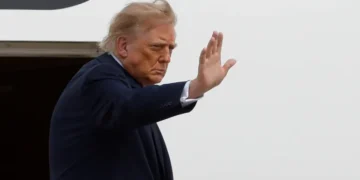






































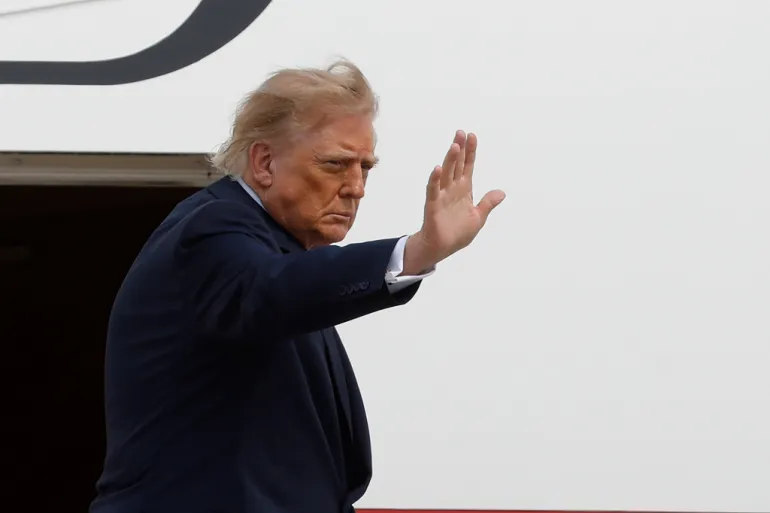
The United States government has announced a significant agreement to secure control over a substantial portion of Venezuela’s oil reserves. President Donald Trump, who has long advocated for the U.S. to “take back” foreign energy resources, confirmed on Friday that his administration reached a deal with the government of Venezuelan interim President Delcy Rodriguez. The agreement grants the United States majority control over 17 strategic oil fields, which the administration claims contain 65 billion barrels of proven oil reserves.
President Trump celebrated the announcement on social media, describing the arrangement as “THE BIGGEST OIL DEAL IN WORLD HISTORY!” The administration stated it intends to partner with a private business entity to manage the extraction of fuel from these fields. This development marks a major shift in the geopolitical and economic landscape of the region, as the U.S. government seeks to integrate these resources into its own energy portfolio.
The figure of 65 billion barrels represents roughly one-fifth of Venezuela’s total proven oil reserves. According to 2023 U.S. government estimates, Venezuela holds approximately 303 billion barrels of oil, the largest known deposit in the world, accounting for about 17 percent of global supply. However, the accuracy of the 65-billion-barrel estimate has been met with skepticism from industry experts. Oil market researcher Rory Johnston characterized the number as a “red herring” with little relevance to actual operational deals, suggesting it is a classic, inflated figure intended for political messaging.
The deal comes at a time of significant domestic energy concerns for the United States. President Trump has claimed the agreement “MORE THAN DOUBLES American Oil Reserves.” Current government data suggests that proven U.S. oil reserves are declining, standing at approximately 46 billion barrels. Furthermore, the U.S. Strategic Petroleum Reserve, designed to hold 714 million barrels, has seen its emergency stockpile shrink to 289.7 million barrels, raising concerns about long-term energy security.
The year 2026 has been defined by a radical transformation in the relationship between Washington and Caracas. Following years of tension with former socialist President Nicolas Maduro—who is currently awaiting trial in New York on drug and weapons-related charges—the U.S. moved to support the administration of Delcy Rodriguez after a military confrontation on January 3. Following that conflict, the Trump administration declared it would assume control of Venezuela’s oil exports indefinitely.
The move has drawn sharp criticism from legal experts, who argue that such intervention violates international law, which grants nations “permanent sovereignty” over their own natural resources. Despite these objections, the Trump administration has framed the seizure as a necessary step to protect U.S. interests. In the months leading up to the January 3 intervention, the administration argued that Venezuela’s oil belonged to the international community and condemned the nationalization of the industry as a theft of private assets.
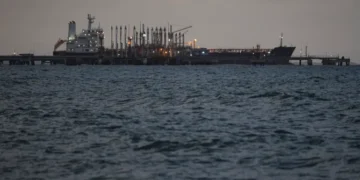
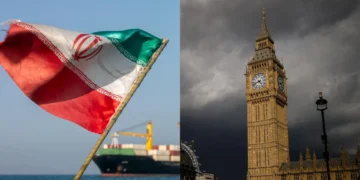
This aggressive energy policy is occurring against the backdrop of broader global instability. Friday marked the six-month anniversary of the U.S.-Israel war on Iran, which began on February 28. The subsequent closure of the Strait of Hormuz by Iran has disrupted the transit of nearly one-fifth of the world’s oil, leading to a spike in global prices. With U.S. voters heading to the polls for midterm elections, the American Automobile Association (AAA) has warned that this August is expected to be the most expensive on record for motorists.
President Trump has explicitly linked the Venezuelan oil deal to his “America First” agenda, suggesting that the influx of resources will help lower gas prices for American consumers. During a recent event, he described the extraction of Venezuelan oil as a way to “pay for the war” against the country. “To the victor belong the spoils, right?” Trump remarked to the crowd, framing the acquisition as a return to traditional, robust foreign policy.
Secretary of State Marco Rubio echoed this sentiment, praising the deal as a victory for the administration’s strategy. “It demonstrates how President Trump’s bold foreign policy is driving America First wins: securing stable reserves and strengthening our economic position,” Rubio stated. The administration continues to hold up the current Venezuelan government as a model for cooperation, emphasizing that the arrangement is a key pillar of its efforts to expand U.S. wealth and territorial influence.
The rhetoric surrounding the deal aligns with President Trump’s long-standing interest in using military and economic power to secure global energy. As early as 2011, he suggested the U.S. should use its military to extract oil from other nations, famously stating regarding Libya, “I would take the oil.” More recently, he has proposed making the Strait of Hormuz a U.S. territory to ensure control over its flow, further underscoring a consistent, if controversial, approach to global energy dominance. The report also notes that and what could the new deal mean for US-Venezuela relations, what has been said so far. The report also notes that we answer those questions and more in this explainer. The report also notes that but some analysts have questioned the 65-billion-barrel total Trump announced. The report also notes that there has been speculation that Trump may have made a splashy announcement to help jumpstart the US economy, with no fixed terms released. The report also notes that “It’s just a classic big number that Trump was sure to jump all over and will repeat ad nauseam going forward.”. The report also notes that standing at approximately 46 billion barrels by the end of 2024, government estimates indicate that proven US oil reserves are declining. The report also notes that which have hit their lowest levels since 1982, trump has indicated that Friday’s deal will help restore the US oil reserves. The report also notes that since 2013, the South American country had been led by socialist President Nicolas Maduro, whose tenure had been defined by a series of disputed elections and crackdowns on political dissent.
Source: Al Jazeera