








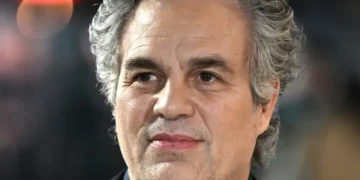














































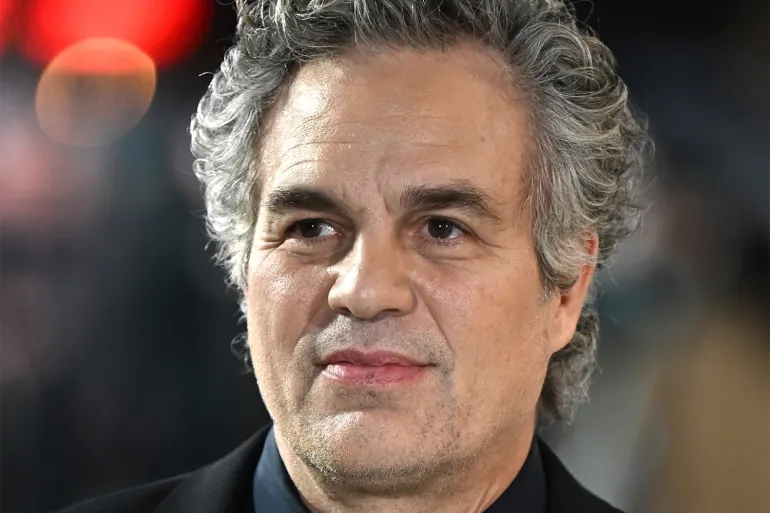
More than 180 prominent Jewish figures, largely from the entertainment industry, have publicly rallied behind actor Mark Ruffalo. This show of support follows accusations of antisemitism directed at the Marvel star after he voiced opposition to the proposed $111 billion acquisition of Warner Bros by Paramount.
The controversy began on August 21, when Ruffalo shared an archival video on his Instagram story featuring Safra Catz, the executive vice chair of Oracle. In the clip, Catz highlighted the company’s efforts to support Israel following the October 2023 Hamas-led attack, stating that Oracle aimed to ensure its “profoundly scary technology” was available for the effort. Ruffalo criticized Catz, accusing her of supporting what he described as an “apartheid system of oppression” and a “genocide” facilitated by Oracle’s technology.
Paramount, whose parent company is owned by the family of Oracle co-founder Larry Ellison, responded by accusing the actor of using “antisemitic tropes.” A company representative stated that invoking terms like “genocide” and “apartheid” in the context of a corporate transaction was “a bridge too far.”
Ruffalo dismissed the company’s allegations as “appalling and fundamentally dishonest.” He maintained that his critiques were directed at Israeli government policies, military technology contracts, and the executives involved, rather than the Jewish community. “My views come from my own political convictions and should never be interpreted as hostility toward Jewish people,” he clarified.
The actor’s stance has drawn sharp criticism from pro-Israel organizations. Jim Berk, CEO of the Simon Wiesenthal Center, labeled Ruffalo’s comments a “textbook case of obsession and demonisation,” while Anti-Defamation League head Jonathan Greenblatt described the remarks as “cynical.”
Beyond the specific accusations against Ruffalo, the proposed merger has faced broader industry resistance. In April, over 1,400 film industry figures—including actors Ben Stiller and Emma Thompson—signed a letter opposing the deal. They argued that the transaction would further consolidate an already concentrated media landscape, harming competition, workers, and consumers.
Historians and analysts suggest the backlash against Ruffalo is part of a wider pattern. Zachary Foster, a historian of Palestine, characterized the antisemitism accusations as a “nonsensical, irrational double standard,” noting that criticism of other nations is rarely met with similar charges of bigotry. Foster argued that the focus on Ruffalo is a political maneuver intended to distract from the broader implications of corporate ties to the Israeli military.
Larry Ellison has long been a significant donor to the Friends of the Israeli Army, contributing $16.6 million in 2017 alone and stating there was “no greater honour” than supporting the military. Additionally, in October, Paramount-Skydance acquired the commentary website The Free Press, appointing its founder, Bari Weiss, as editor-in-chief.
Observers note that the weaponization of antisemitism allegations has become a frequent tactic to suppress criticism of Israel. Political analyst Yousef Munayyer suggested that as defending Israeli policies becomes more difficult, pro-Israel groups have shifted their strategy toward attacking critics. This approach has previously impacted other public figures, including actors Susan Sarandon and Melissa Barrera, who were dropped by their agencies following their own criticisms of Israel.
Public sentiment in the United States appears to be shifting. A February Gallup survey indicated that 41 percent of Americans sympathized more with Palestinians, compared to 36 percent who favored Israelis—a notable change from pre-October 2023 figures, when 54 percent favored Israel and 31 percent favored Palestine.
Despite the pressure, some analysts urge critics to stand their ground. “They are losing control of the narrative and support of the population,” said analyst Laila Younes, warning that capitulation only encourages further targeting of dissenters. Meanwhile, the debate continues to intensify, with other figures, such as conservative media personality Ben Shapiro, further polarizing the discourse through projects like the film *Infidel*. The report also notes that most of them from the entertainment industry, on Wednesday came out in strong support of Hollywood actor Mark Ruffalo, rejecting the accusations of anti-Semitism he has faced since opposing a controversial merger between Paramount Skydance and Warner Bros Discovery, more than 180 prominent Jewish figures. The report also notes that experts say the Ruffalo-Paramount controversy is one of countless examples of a longstanding problem – that accusations of anti-Semitism are increasingly being used to discredit criticism of Israel, particularly as public opinion in the United States becomes more critical of the country’s conduct in Gaza. The report also notes that “From one of the biggest tech companies in the world. The report also notes that powering some of the most destructive and inhuman forces in the world. The report also notes that why has Trump pushed this illegal merger through?” he added. The report also notes that “Mergers like this are almost always bad for workers, consumers, and the industry they tend to dominate.”. The report also notes that “If you attack Israel, you’re anti-Semitic, but if you attack any other country in the world, you’re not accused of being bigoted towards that country’s professed religious identity,” he told.
Source: Al Jazeera