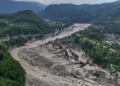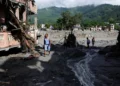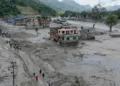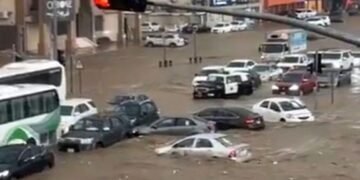










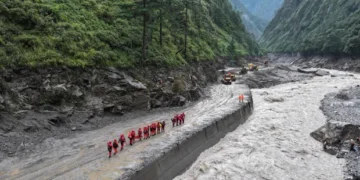



























































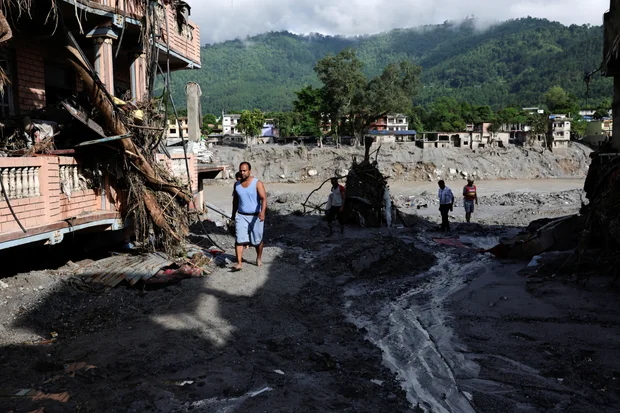
Rescue teams are working under high-alert conditions in Nepal and Tibet as they navigate the aftermath of devastating flash floods and landslides. The disaster, which has claimed at least 540 lives according to the latest reports, has left hundreds of people unaccounted for, with local estimates suggesting the number of missing individuals could reach as high as 12,000.
The catastrophe is believed to have been triggered by the collapse of a rocky ledge that supported a significant portion of a glacier. This failure sent a massive torrent of water and debris downstream, obliterating infrastructure, bridges, and residential areas in its path. The Red Cross estimates that approximately 90,000 people have been impacted by the flooding.
In Nepal, authorities have confirmed 538 deaths, while the official count of the missing stands at 977. Meanwhile, Chinese state media reports five deaths on their side of the border. Helicopters have successfully evacuated more than 3,000 people to safety, and rescue operations remain active despite the immense challenges posed by the terrain.
One critical area of focus is the Upper Trishuli-1 Hydropower Project in the Rasuwa district, where Nepali Army personnel are working to reach individuals trapped inside a hydropower tunnel. Brig. Gen. Raja Ram Basnet noted that the rescue efforts are complicated by the fact that entry and exit points have been buried under thick layers of mud.
Police have issued a fresh alert following reports that a dam on the Tibetan side of the border may have burst. While Chinese state broadcaster CCTV initially indicated that a barrier lake formed by debris was located over six miles from the Gyirong Port border crossing, they later described the flood risks from the overflowing water as manageable. Nevertheless, security personnel remain on high alert.
The disaster has affected a significant number of foreign nationals. The Nepal Tourism Board reported that 27 foreign citizens have been rescued from the Rasuwa district, including two Americans. A U.S. State Department spokesperson confirmed they are monitoring the status of approximately 90 Americans who may have been impacted, noting that three U.S. citizens have been rescued so far with no confirmed deaths among them.
Among those missing are members of a pilgrimage group organized by the Isha Foundation. Leslie Crespi, a community liaison for the group, stated that 80 people from 19 countries, including 22 Americans, were unaccounted for. The group, which included roughly 1,000 participants, was traveling toward Mount Kailash in Tibet when the disaster struck. Deepak Dandu, a U.S. citizen, confirmed his wife, Sridevi Vejella, was among the group present at the Gyirong Port immigration complex when the floods occurred.
Geoscientist Jakob Steiner emphasized that the Hindu Kush Himalayan region is warming rapidly, leading to significant instability in glaciers and mountain slopes. He warned that such extreme events are becoming the new normal for the region as climate change continues to drive environmental shifts.
President Trump addressed the situation from the Oval Office, describing the destruction of well-built structures as akin to toothpicks being wiped away. He confirmed that the United States has offered assistance to Nepalese leadership to support their ongoing relief efforts.
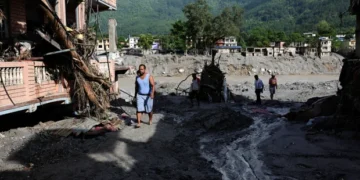
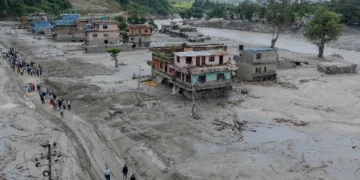
As the search continues, survivors have shared harrowing accounts of the event. One individual described the disaster not as a standard flood, but as a “tsunami” of mud and water that arrived with little warning. The town of Timure, once a vibrant hub of hotels, schools, and government offices, was reportedly decimated by the wall of debris.
The Nepal Police, led by spokesperson Abi Narayan Kafle, have confirmed that rescue operations have not stopped. Teams continue to work through the mud-caked landscape, prioritizing the recovery of survivors as they piece together the scale of the destruction. The report also notes that kathmandu, Nepal — Rescuers pulled out survivors caked in dark brown mud and helicopters lifted stranded people to safety Friday as Nepal and China raced to respond after catastrophic flash floods and lanslides killed more than 540 people and left more than 1,000 missing. The report also notes that according to French news agency AFP, nepal authorities said the death toll in the Himalayan nation rose to 538. The report also notes that china’s state media previously said 558 people were missing and Nepal’s disaster management authority said Friday that 977 were unaccounted for. The report also notes that security personnel and rescue and relief workers were told to stay on high alert and immediately move to a safe location if necessary. The report also notes that the border crossing with Nepal that was decimated by a wall of mud and water on Wednesday morning, it said the risk of flooding was high, although Chinese state broadcaster CCTV reported Friday that the lake was more than 6 miles from Gyirong Port. The report also notes that it said the lake was at an elevation of 9,680 feet, about 3,280 feet above Gyirong Port.
Source: CBS News