














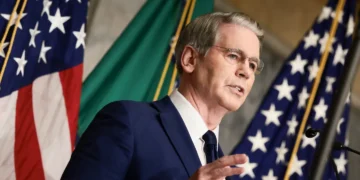









































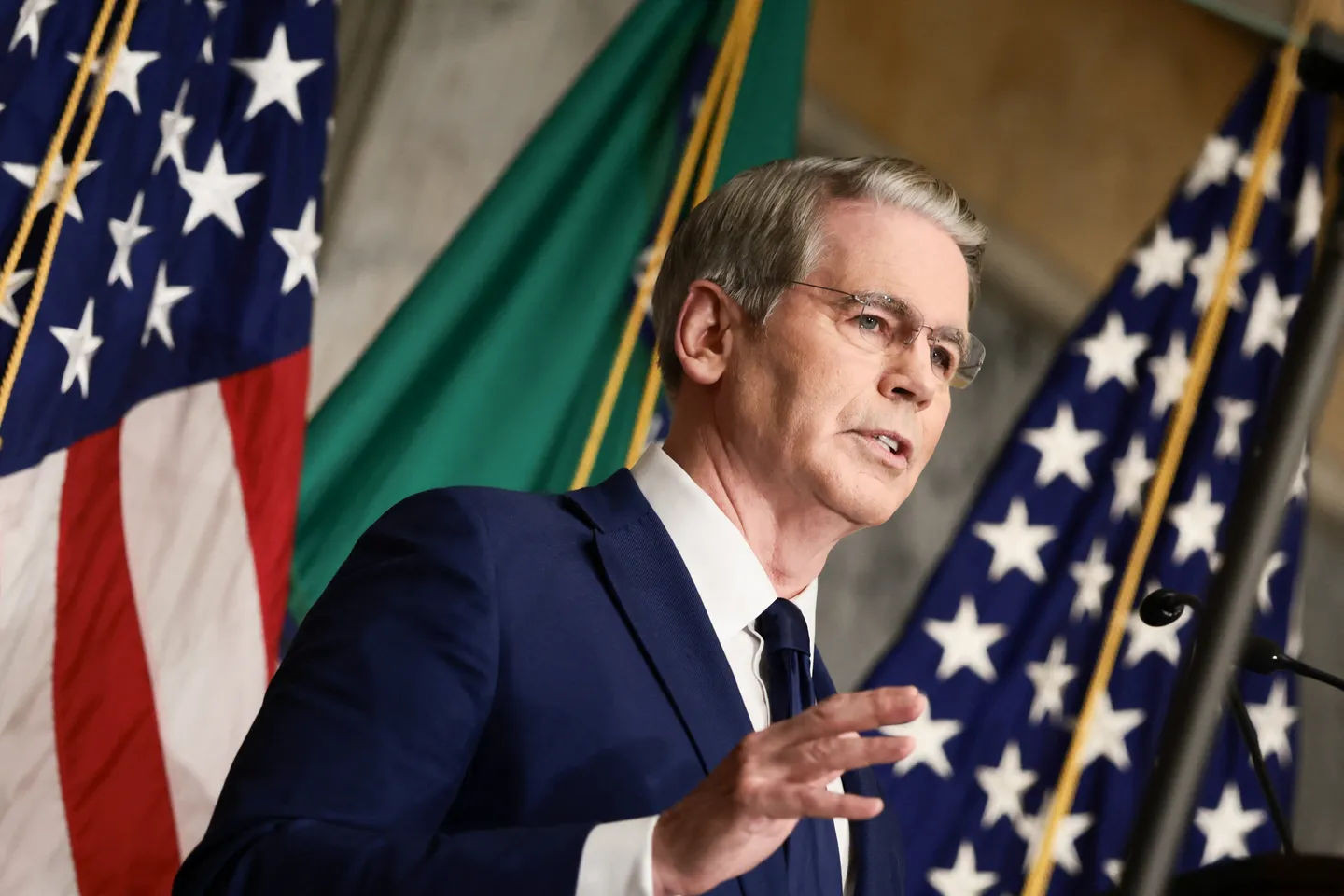
On August 24, US Treasury Secretary Scott Bessent announced the implementation of “Operation Economic Outcast,” a new suite of unprecedented measures designed to choke off every remaining economic lifeline supporting the Iranian government. This escalation arrives six months into the US-Israeli war against Tehran, marking a strategic pivot as Washington shifts its focus from direct military engagement to intensified economic strangulation.
For months, the US has conducted aerial strikes against Iranian targets and enforced a naval blockade of the Strait of Hormuz. Despite these efforts, Tehran has maintained de facto control over the vital waterway, which handled one-fifth of global energy supplies prior to the February 28 outbreak of hostilities. Analysts suggest that the move toward economic warfare indicates that the US Treasury is now expected to achieve results that military operations have failed to deliver.
The new sanctions package focuses on five sectors deemed critical to Iran’s survival: digital assets, technology, gold, aviation, and shipping. While primary sanctions already restrict US entities from engaging with Iran, these new measures rely heavily on secondary sanctions, which penalize third-party actors globally for maintaining trade links with Tehran. By targeting these areas, the US aims to close loopholes that have allowed the Iranian economy to persist despite long-standing isolation.
Iran’s financial situation has deteriorated significantly, with the unofficial exchange rate of the rial plummeting to a record low of two million to the dollar in recent days. Even before the war, Tehran faced a comprehensive ban on oil sales via Western banking and shipping channels. To circumvent these restrictions, Iran developed shadow networks, utilizing “dark-fleet” tankers—uninsured, aging vessels that disable tracking devices—to transport crude oil to China. These shipments were often rebranded as Malaysian or Middle Eastern oil, with payments processed in yuan through second-tier Chinese banks like the Bank of Kunlun.
Mustafa Caner, an Iran expert at Sakarya University’s Middle East Institute, notes that the new measures represent a qualitative shift in three key areas. First, the inclusion of digital assets and cryptocurrencies under strict oversight aims to eliminate alternative financial channels. Second, the US is aggressively leveraging its diplomatic influence to force third-party nations to choose between trading with Iran or maintaining access to the US financial system. Finally, these sanctions are intended to compound the economic pressure already exerted by the blockade of the Strait of Hormuz.
The strategy carries inherent risks, as the expansion of secondary sanctions could strain relations with countries Washington hopes to keep as allies. For instance, India, which has historically maintained commercial ties and oil purchases from Iran, now faces a difficult test in its relationship with Washington. Meanwhile, the United Arab Emirates, previously a major trade partner with bilateral trade valued at roughly $28 billion in 2024, has recently announced the cessation of all trade relations with Tehran—a move expected to inflict genuine damage on the Iranian economy.
China remains a critical variable in the success of these sanctions. As the primary buyer of Iranian oil, Beijing has historically disregarded US and UN measures. A Chinese foreign ministry spokesperson stated that Beijing’s cooperation with Iran remains strictly within the framework of international law, signaling that full compliance with the new US rules is unlikely. Furthermore, Iran continues to utilize infrastructure like the “Mir” electronic card payment network—a Russian-developed alternative to Visa and Mastercard—to facilitate domestic transactions.
Tehran has dismissed the new sanctions as an act of desperation, vowing that the measures will fail to defeat the state. Experts suggest that the US strategy relies on the belief that economic hardship will turn the Iranian population against its government, rather than uniting them against an external military enemy. Conversely, some observers warn that such pressure may embolden hardline factions within Iran who believe the only path forward is to prolong the conflict and inflict greater pain on the United States. The report also notes that sanctions limit a country’s ability to trade with the outside world. The report also notes that a business or bank can’t make transactions in major currencies or use SWIFT, the mainstay of the global payments network that banks rely on to process cross-border trade, once sanctioned. The report also notes that successive US governments have used sanctions over the decades to pressure Tehran into ending its nuclear programme and support for regional proxies. The report also notes that unemployment and inflation for years under crippling US sanctions, iran’s economy has suffered stagnation. The report also notes that however, Tehran has adapted to the sanctions regime, to a limited extent. The report also notes that for example, it exported 90 percent of its crude oil to China every year before the war.
Source: TRT World