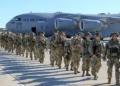





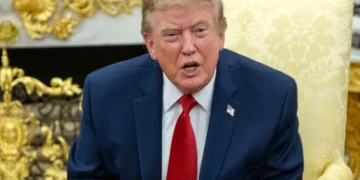
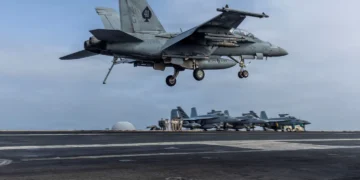












































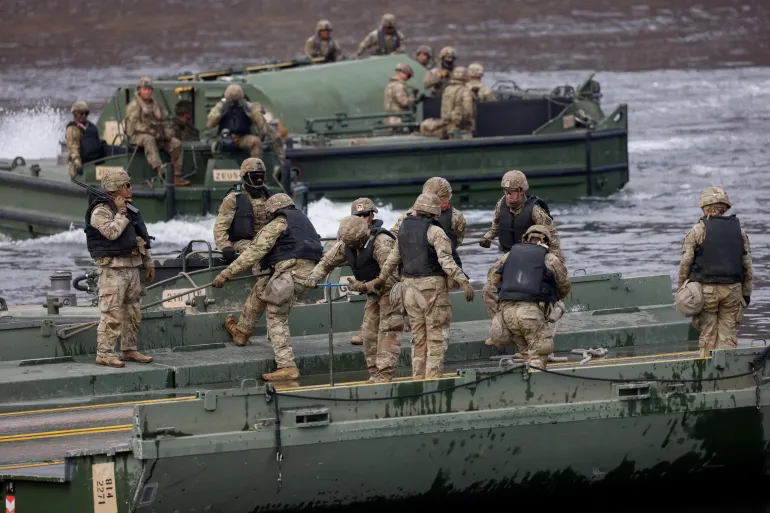
South Korea and the United States have significantly curtailed their annual joint military exercises, known as Ulchi Freedom Shield, following a direct order from US President Donald Trump. The drills, which commenced on August 17, were originally scheduled for 11 days but will now conclude on August 21, marking a reduction to just five days. The South Korean Joint Chiefs of Staff (JCS) confirmed on Tuesday that this adjustment was made at Washington’s request, noting that several combined field maneuvers will be scaled back or replaced with simulations.
A spokesperson for the US Department of Defense stated that the reduction was substantial, emphasizing that while some live-training events were canceled, the changes were designed to maintain essential readiness without compromising core training objectives. According to reports from South Korean media, Defense Minister Ahn Gyu-back indicated that the allies intend to scrap the second phase of the exercises, which was originally slated to focus on counterattack operations following an initial defensive phase.
The directive from President Trump, issued on Sunday, cited his “very good relationship” with North Korean leader Kim Jong Un as a primary motivation. Furthermore, the President linked the decision to Seoul’s refusal to participate in the US-led war on Iran. During a parliamentary hearing on Wednesday, South Korean Foreign Minister Cho Hyun revealed that neither Seoul nor Washington officials had received advance notice of the President’s order.
Minister Cho suggested that the move appeared to be a calculated effort by the White House to pressure South Korea on multiple fronts, including its involvement in the Iran conflict and broader regional security issues. Meanwhile, North Korea, which has long characterized these joint exercises as provocative rehearsals for an invasion, denounced the drills again on Wednesday. Pyongyang maintained that it would continue to exercise its right to self-defense against what it describes as military threats from the US and South Korea.
Despite the scaling back of the exercises, the South Korean presidential office insisted on Tuesday that the drills were never intended to provoke North Korea or escalate tensions on the peninsula. President Trump also claimed on Monday that he is making the global situation “much safer” through his personal diplomacy with Kim Jong Un, though he did not provide specific details regarding recent communications between the two leaders. The pair met three times during Trump’s first term but have not engaged in direct talks during his second.
Speculation regarding future diplomacy remains high, with The Wall Street Journal reporting that Trump has urged his aides to facilitate an in-person meeting with Kim this autumn. Officials suggested that potential talks could occur during a planned trip to Asia in November for the Asia Pacific Economic Cooperation summit in Shenzhen, China. The US currently maintains a force of approximately 28,500 troops in South Korea, a security arrangement rooted in the 1950-53 Korean War, which concluded with an armistice rather than a formal peace treaty.
Trump’s ongoing criticism of long-standing alliances has sparked concern among regional partners regarding the long-term stability of US security commitments in East Asia. Japanese Defence Minister Shinjiro Koizumi, speaking to journalists in Australia on Tuesday, stressed that security cooperation between Japan, the US, and South Korea remains critical for regional peace, especially given the current complex security environment.
Australian Defence Minister Richard Marles echoed these concerns when asked about the US President’s comments. He noted that Australia remains deeply troubled by North Korea’s nuclear and missile development programs. Marles characterized North Korea as a primary source of instability in the region, affirming that his government has consistently raised these concerns with international partners. The report also notes that with some cancelled or switched to simulations, a US Department of Defense official told the Reuters news agency the department had substantially reduced the exercise and associated live-training events. The report also notes that he added that Trump’s message appeared aimed at pressuring Seoul to become involved in the war on Iran. The report also notes that “I think in the challenging world that we face … and there are many challenges, but North Korea is the author of quite a few of those challenges,” he added.
Source: Aljazeera