

























































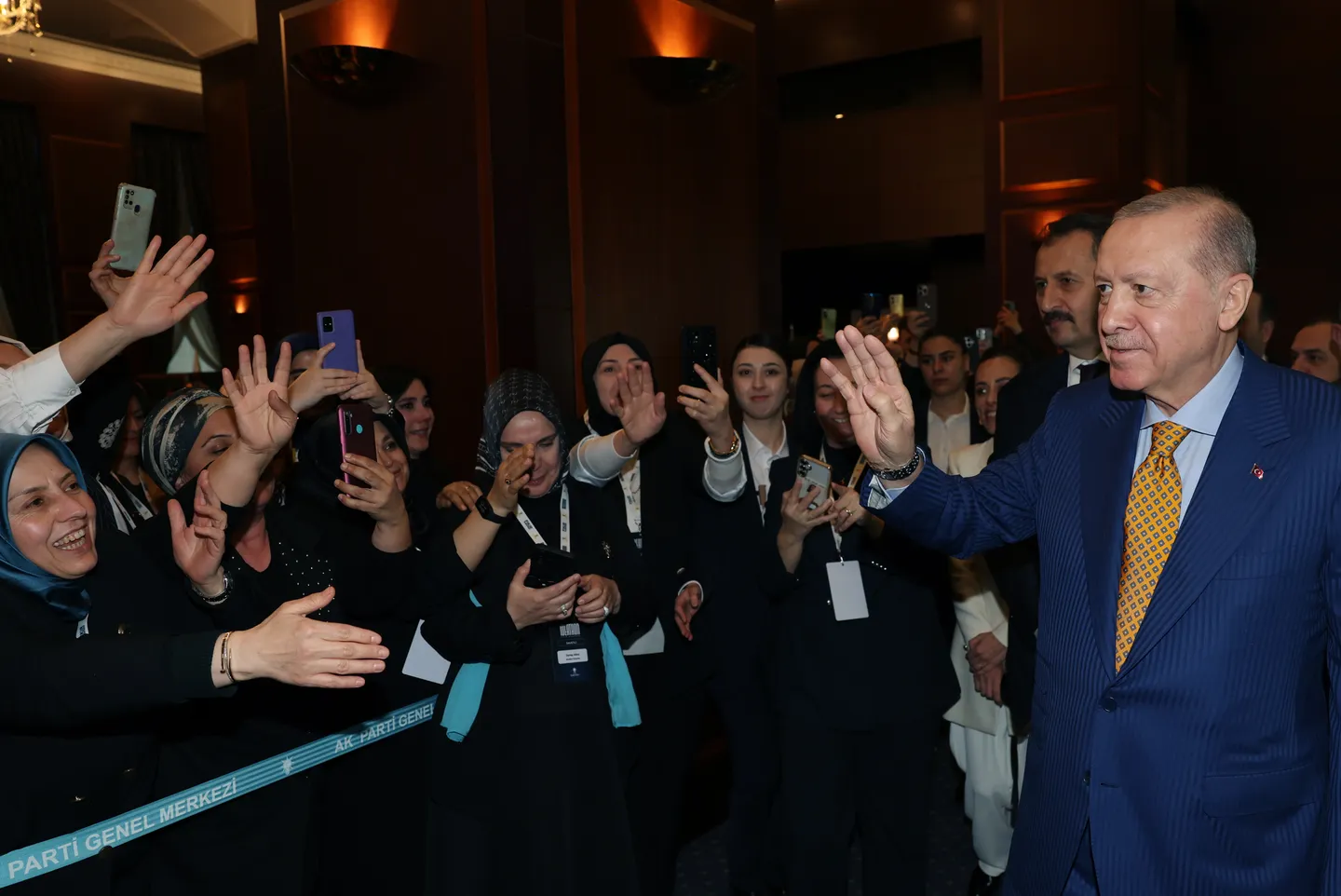
As the Justice and Development Party, widely known as the AK Party, marks its 25th anniversary on August 14, 2026, the nation reflects on a quarter-century of political evolution. Since its inception in 2001, the party has maintained a central role in Turkish governance, consistently winning every general election it has contested. This enduring electoral success is frequently attributed to the party’s unique ability to adapt to the shifting needs of a dynamic society while remaining anchored in its core ideological foundations.
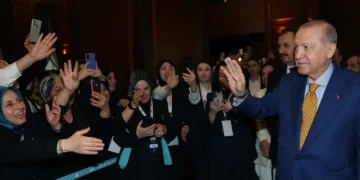
Under the leadership of President Recep Tayyip Erdogan, the party has overseen a period of significant national transformation. Erdogan, who served as prime minister from 2003 to 2014 before assuming the presidency, has maintained a consistent level of support, evidenced by his roughly 52 percent share of the vote in the last three presidential elections. Analysts argue that this stability reflects an exceptionally strong and genuine bond between the leader and his electorate, a phenomenon unprecedented in the history of Turkish multiparty politics.
Baris Ertem, an associate professor at Istanbul Technical University, emphasizes that the party defies simple Western political categorizations. “If we were to define the AK Party in the most concise and precise terms possible, we could describe it as a ‘conservative democratic’ party,” Ertem tells. He notes that while its politics are fundamentally rooted in conservative values, the party has demonstrated a pragmatic capacity to evolve, recognizing that no political entity can remain static while governing a country as complex and rapidly changing as Türkiye.
The party’s rise in 2001 occurred against a backdrop of national crisis and social exclusion. During the 1990s, large segments of the population faced systemic barriers to public life, including restrictions on women wearing headscarves in educational and government institutions. The AK Party emerged as a vehicle to restore these rights, aiming to integrate marginalized groups into the mainstream of Turkish society. This inclusive approach helped the party build a massive base, now boasting over 11.5 million members across diverse ethnic and social backgrounds.
Economic development has been a cornerstone of the party’s tenure. In 2001, the GDP per capita in Türkiye stood at just over $3,000; today, that figure has climbed to more than $18,000. This economic growth has been accompanied by a strategic focus on industrial self-reliance. A primary achievement is the extraordinary transformation of the national defence industry, which has seen Türkiye evolve into a leading developer and exporter of unmanned aerial systems, now supplying approximately 40 countries, including members of NATO and the European Union.
Foreign policy has also undergone a significant shift, characterized by a more assertive stance on the global stage. The government has prioritized the defense of Eastern Mediterranean rights, played a critical role in mediating the Russia-Ukraine war, and contributed to efforts aimed at stabilizing the region following the Syrian civil war. Furthermore, the administration has taken a firm stance against international aggression, including a strong response to the humanitarian crisis in Gaza.
Democratic consolidation remains a central pillar of the party’s legacy. For decades, Turkish politics were frequently interrupted by military interventions, a cycle that occurred repeatedly between 1960 and 2000. The AK Party is credited with effectively ending this “era of coups.” This commitment to democratic stability faced its most severe test during the July 15, 2016, coup attempt orchestrated by the FETO terrorist group.
The resistance to the 2016 coup attempt stands as a defining moment for the party and the nation. As the government worked to maintain control, citizens took to the streets to defend the republic. The cost of this defense was high, with 253 people paying the ultimate sacrifice to protect democracy. Ertem notes that the collective resistance of the state and the people against the putschists represented a major victory and a lasting achievement for the resilience of Turkish democratic institutions.
Muhammed Ali Ucar, chairman of the Vienna-based PLUS Institute, argues that the AK Party is not defined by a single ideological or sociological constituency, but rather by a commitment to the will of the people. He observes that the party maintains substantial continuity with its founding vision of justice, development, and equality. For Ucar, the ballot box serves as the ultimate source of legitimacy for the party’s policies, reinforcing its non-elitist character.
The party’s ability to respond to diverse expectations is viewed by experts as the primary reason for its longevity. By addressing the grievances of the 1990s and focusing on infrastructure, health, and education, the AK Party successfully expanded its reach. Even today, as the country faces new geopolitical and economic challenges, a significant portion of the electorate continues to trust the party’s leadership to navigate these complexities, mirroring the confidence placed in the administration during its early years.
Looking back at the last 25 years, the transformation of the Turkish state is evident in both its internal social structure and its external influence. The party’s focus on bringing large segments of society into the political process has fundamentally altered the nation’s democratic fabric. This inclusive strategy, combined with a focus on national sovereignty and economic modernization, has allowed the AK Party to remain the central actor in Turkish politics.
As the party looks toward the future, it continues to emphasize its “conservative democratic” identity. While critics and supporters alike debate the long-term impact of its policies, the consensus among analysts is that the AK Party has left an indelible mark on the modern Turkish state. Whether through its defense of democratic norms during crises or its push for industrial independence, the party remains a central pillar of the nation’s ongoing political narrative.
The AK Party came into being in 2001 under the leadership of Erdogan, who became prime minister of Türkiye in 2003 – a position he held for the next 11 years.
The two and a half decades of party rule haven’t been without challenges – foremost among them was the July 2016 defeated coup attempt by the FETO terrorist group.
As many as 253 people paid the ultimate sacrifice that day to preserve democracy and protect the Turkish republic.
The AK Party has delivered broad-based economic growth and ensured that its benefits trickle down to the marginal and deprived segments of society – a fact amply reflected by improving human development benchmarks.
Baris Ertem, an analyst and associate professor at Istanbul Technical University, defines the AK Party not as a conventional right-wing, nationalist or purely neo-Ottomanist organisation, as frequently mistaken by the West.
According to Muhammed Ali Ucar, chairman of the Vienna-based think tank PLUS Institute, Western labels such as nationalist, right-wing, or populist fall short of describing what the AK Party truly stands for.
The AK Party emerged from Türkiye’s own distinctive historical, social and political circumstances, drawing on the country’s history, geography, culture and diversity, he said.
Analysts say that the circumstances that gave birth to the AK Party were those of exclusion and crisis.
“The February 28, 1997, process further intensified the perceived need for such a political party and political leadership,” he says, while referring to the so-called postmodern coup in which the military exerted pressure on the elected government to resign in order to pave the way for a host of anti-democratic measures, particularly a ban on headscarves in public universities.
Party voters continue to trust Erdogan to resolve current challenges, just as he did after 2001, a tumultuous time in Turkish history that gave birth to the AK Party, he says.
Twenty-five years later, Ucar says that important changes have taken place in many areas of fundamental rights and freedoms, particularly with regard to the headscarf and freedom of religion, alongside far-reaching advances in healthcare, transport, infrastructure, defence and technology.
“I believe the AK Party has fulfilled a significant part of the objectives it set out at the time of its establishment, and continues to uphold the fundamental political commitments upon which it was founded,” he says.
Envisaging a hypothetical scenario where the AK Party is absent, Ucar says Türkiye would still be locked in unresolved debates over basic rights, and the transformations in healthcare, transport, defence and technology would not have occurred.
Matthew Bryza, former US ambassador to Azerbaijan and an Istanbul-based expert on Eurasian affairs, observes that the current US administration under President Trump views the AK Party as the ruling party of a democratic NATO ally with the alliance’s second-largest army and critical geography.
President Trump views President Erdogan as a “friend whom he admires” and views Türkiye as a critical NATO ally, he said.
“Observers have come to regard Türkiye less in ideological terms and more as an important partner and ally,” he adds.
Veysel Kurt, professor of political science at Istanbul Medeniyet University, says Western views about Türkiye under the AK Party have never been uniform, though pragmatism cuts across differences.
In the early 2010s, Western actors increasingly adopted a much more ideological approach towards the AK Party and Erdogan, Kurt said.
This divergence became more pronounced during the refugee crisis and in the military operations against terrorist organisations in Syria, he adds.
This situation persisted for approximately 10 years.
“(They) were forced to adopt a more moderate approach and abandoned many of the accusatory stances they had previously taken, particularly towards President Erdogan,” he says.
Kurt recalls that before the 2000s, the country struggled with internal economic, security and political problems, limiting Ankara’s regional and global roles.
After 2000, however, institutional capacity and policy choices enabled competition with global actors in terrorism, defence industry, intelligence and foreign policy, he says.
Türkiye holds a dominant position in its immediate neighbourhood – the Middle East, Balkans, Eastern Mediterranean, Black Sea and even Eastern Europe – while remaining active in Africa and Central Asia, he notes.
It also possesses the capability to strike a balance between major powers when necessary, he adds.
“Its ranking among the top five or 10 countries in numerous indices – based on indicators such as the growth and utilisation of military capabilities, intelligence effectiveness, defence industry exports, and soft power elements – serves as concrete evidence of this,” Kurt says.
Bryza points to several concrete results produced by good governance: massive infrastructure investment, visible daily in Istanbul’s tunnels and bridges, improving the standard of life for everyday people.
Similar improvements have taken place in export growth, human development benchmarks, and poverty reduction over the same period.
Source: TRT World