











































































A federal appeals court on Friday upheld an order halting construction on Donald Trump’s prized White House ballroom, setting the stage for a high-stakes legal battle at the Supreme Court regarding the limits of presidential authority. The US Court of Appeals for the DC Circuit, which had previously permitted work to continue during its review, ultimately agreed with a lower court that such a massive structural overhaul of the White House requires explicit consent from Congress.
The court granted a two-week stay on its own decision, providing the president a specific window to request intervention from the Supreme Court. The Republican president reacted sharply to the 2-1 ruling, lashing out in a social media post by labeling the court’s decision as “horrendous, politically motivated, and unlawful.”
The two judges in the majority were appointed by Democratic presidents, while the dissenting judge was a Trump appointee. In his response, the president vowed to immediately appeal to the Supreme Court, while reiterating his long-standing argument that the entire construction project is a matter of national security.
While Trump initially touted the ballroom as a necessary venue for hosting grand galas, he has since shifted his rhetoric to emphasize the concurrent addition of an underground military bunker and other security features. Under the district judge’s initial order, work was to be allowed to continue only on a limited set of structures, including those that were underground.
In their ruling, the majority clarified the scope of their decision, stating, “This holding has nothing at all to do with whether the proposed ballroom is desirable, or not, as a matter of policy. This ruling does not even necessarily mean that the Defendants may not ultimately construct the ballroom.”
The court further explained the legal necessity of their stance, noting, “What it does mean is that the Defendants may not do so during the district court’s expeditious litigation without securing Congress’s authorization, as the Constitution and laws require.”
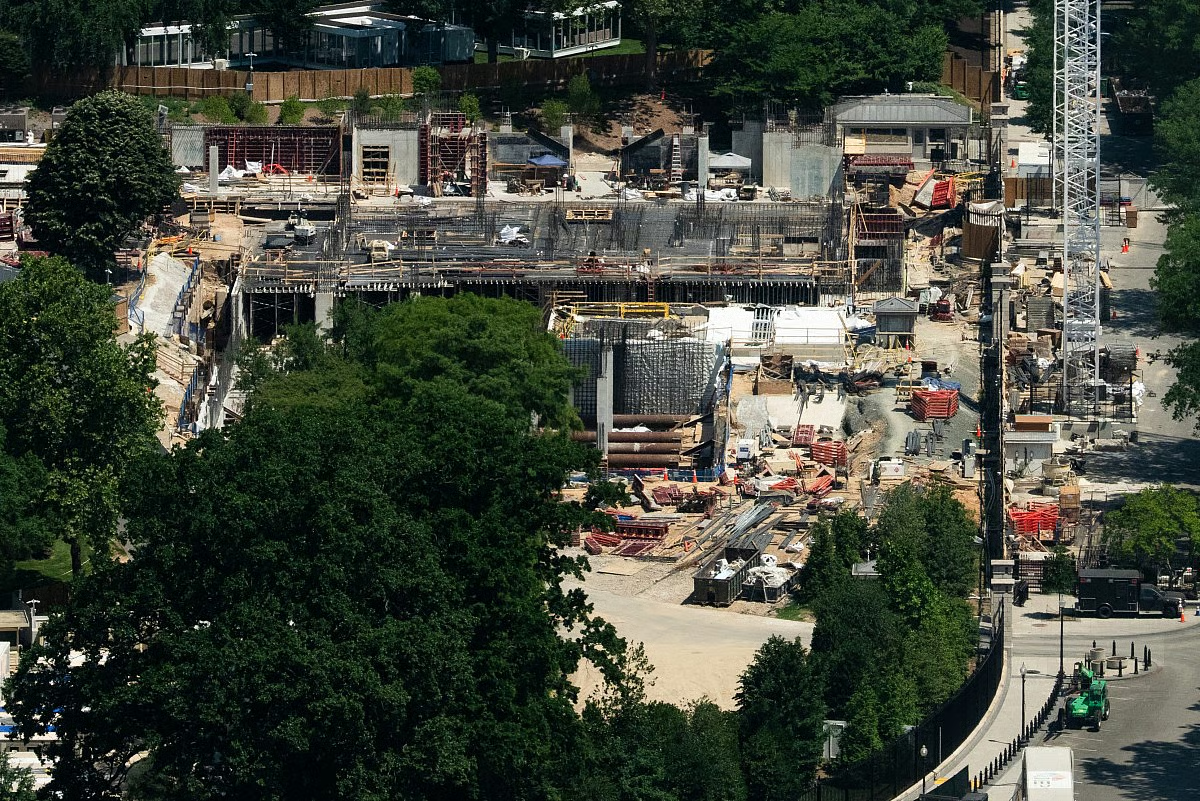
Trump, who has frequently complained that the White House lacks sufficient space for state dinners, unilaterally ordered the construction of the massive ballroom. Work began last year with the sudden demolition of the historic East Wing, and recent photos have shown significant progress on a basement complex, with some concrete walls already rising above ground level.
Financial questions continue to surround the project. Although Trump has insisted the ballroom will be privately financed, media reports from June indicated that significant taxpayer funds were being directed toward the project, which could cost as much as $600 million. The White House initially cited a $200 million price tag, but quickly doubled that estimate to $400 million.
The ballroom is just one of several pet projects intended to leave a lasting mark on Washington before Trump leaves office in 2029, alongside a renovation of the Lincoln Memorial Reflecting Pool and the construction of a gigantic arch. While several of these projects have faced similar legal challenges, the ballroom project is the first to reach the Supreme Court, marking a pivotal moment in the ongoing disputes over the president’s executive reach.
Democrats block $1T defence bill in protest over Iran
Trump rejects Pirro findings on Reflecting Pool damage
Trump’s name removed from Kennedy Center facade
Lawsuit seeks to stop the UFC fight on White House lawn
Trump mocks media, revives third-term talk at gala
Trump weighs harder Iran strikes as conflict widens
‘Too bad for US’: Trump urges action on ruling
Source: Gulf News