
















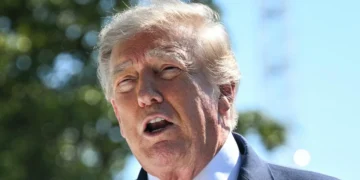



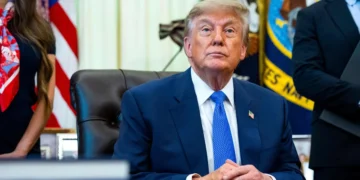














































U.S. President Donald Trump has suggested renaming Lake Ontario to “Lake America,” a move that serves as the latest flashpoint in the rapidly deteriorating trade relationship between Washington and Ottawa. The proposal, shared on Truth Social, came just hours before Canadian Prime Minister Mark Carney was set to announce reciprocal tariffs on American imports.
The administration’s rhetoric has escalated alongside a deepening trade war. Over the weekend, the Trump administration imposed 50% tariffs on $20 billion worth of Canadian goods following the collapse of bilateral negotiations. These measures build upon existing tariffs implemented in 2025, with further threats targeting Canadian steel, aluminum, and automotive sectors.
Recent Developments in U.S.-Canada Relations
- Trade Conflict: The U.S. and Canada remain deadlocked over trade, with Washington threatening additional 50% tariffs on vehicles and auto parts.
- Diplomatic Friction: Ontario Premier Doug Ford and President Trump have engaged in a public exchange of personal insults, though Ford has since called for a cooling of tensions to resume negotiations.
- Official Stance: Prime Minister Mark Carney has accused the U.S. of attempting to dismantle major Canadian industries.
- Legislative Action: The U.S. House has voted to rescind certain Trump-era tariffs on Canada.
- Border Disputes: The two nations continue to clash over trade terms, with Canada vowing to implement its own tariffs starting September 8.
- Political Rhetoric: President Trump has periodically suggested that Canada should become the 51st U.S. state, a notion dismissed by Canadian officials.
- Public Reaction: Canadian residents have largely panned the renaming proposal, viewing it as an aggressive and unnecessary branding exercise.
The name “Ontario” is derived from the Huron Indigenous term “oniatarí:io,” meaning “lake of shining waters,” and predates European settlement in the region. While the U.S. government holds significant authority over domestic geographic naming, it lacks the power to force Canada or international bodies to adopt its preferred terminology. This latest branding effort mirrors Trump’s executive order during his second inauguration, which sought to rename the Gulf of Mexico as the “Gulf of America”—a change that remains unrecognized by Mexico and most international authorities.
Public reaction in the region has been mixed. Patricia Wiseman, an Ontario resident, dismissed the proposal, stating, “He can blow out his hole as much as he wants to, but it’s never going to happen, because Canadians are strong.” Conversely, some residents on the U.S. side of the border, such as fisherman Jim Fetterhoff in Port Ontario, New York, expressed support for the move, citing frustration over Canadian trade policies regarding dairy and other goods.
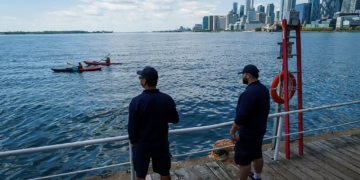
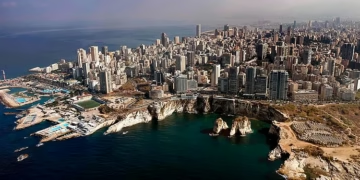
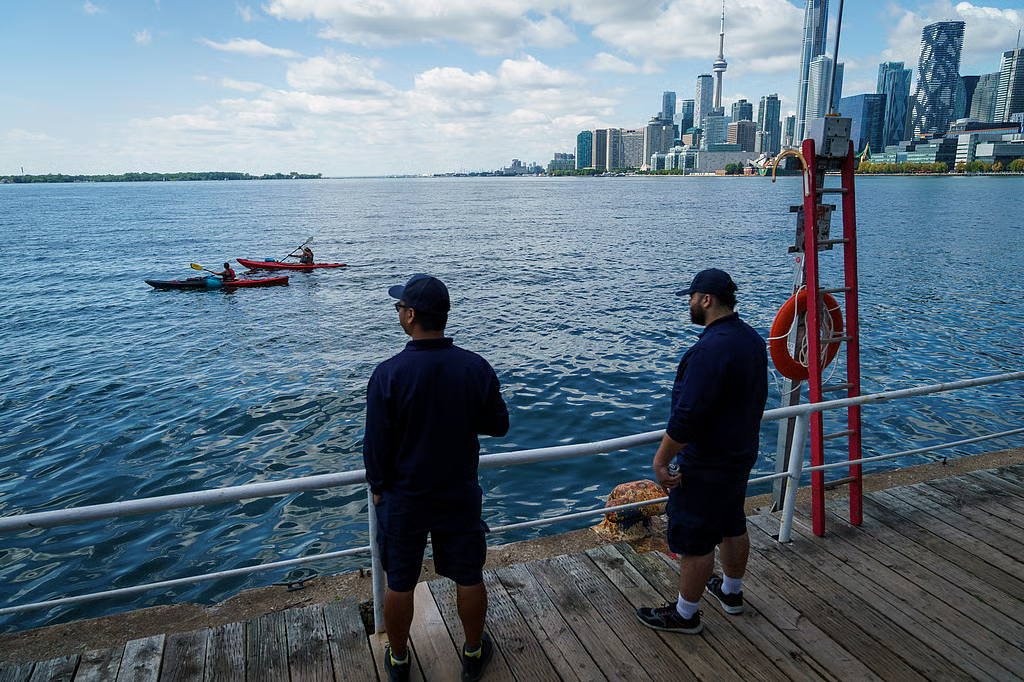
The geopolitical significance of the lake is substantial, as it forms a major portion of the border between New York State and the province of Ontario. Toronto, Canada’s most populous city, sits on its northern shore, and the province serves as a primary export destination for over a dozen U.S. states. Despite the current hostility, many residents on both sides of the border expressed a desire for the two nations to resolve their differences, with some noting that the current political climate is temporary.
Historical precedents for renaming landmarks exist, such as President Barack Obama’s 2015 decision to restore the name “Denali” to the mountain previously known as Mount McKinley. However, Trump has previously reversed such decisions, including returning the name Mount McKinley to the Alaskan peak to honor the 25th U.S. president. As the trade dispute continues, the prospect of a name change for Lake Ontario remains a symbolic, albeit contentious, element of the broader economic conflict. The report also notes that it may be more complicated than that. The report also notes that “I believe the American people love us, and we love them,” Wiseman said. The report also notes that “They’re going through as much turmoil as we are. The report also notes that hopefully, one day we can reunite.”. The report also notes that “The United States is giving serious consideration to changing the name of Lake Ontario to Lake America in that we don’t expect to doing much business with Ontario any longer,” Trump posted Monday on Truth Social. The report also notes that the White House followed later in the day by posting on social media a toy Lego map of the U.S. The report also notes that which share borders along multiple Great Lakes, including Lake Ontario, are locked in an extended trade dispute, with the Trump administration imposing 50% tariffs on $20 billion worth of Canadian goods over the weekend after talks between the countries broke down, the US and Canada. The report also notes that shortly after his second presidency began, that ratcheted up lower tariffs that Trump imposed in 2025.
Important Details
- The report also notes that trump is a ‘bad person’: Canadian provincial leader.
- The report also notes that get Updates on Topics You Choose.
- The report also notes that uS, Canada fail to reach tariff deal, deepen trade war.
Source: Gulf News