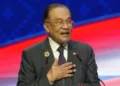




















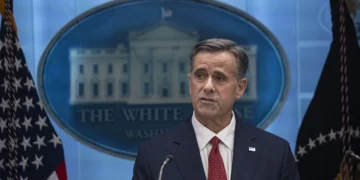

















































Republican Senator Bill Cassidy of Louisiana announced on Friday that he will vote to confirm Todd Blanche as the next attorney general. This endorsement is a pivotal development, effectively clearing the path for Blanche to lead the Justice Department in a permanent capacity.
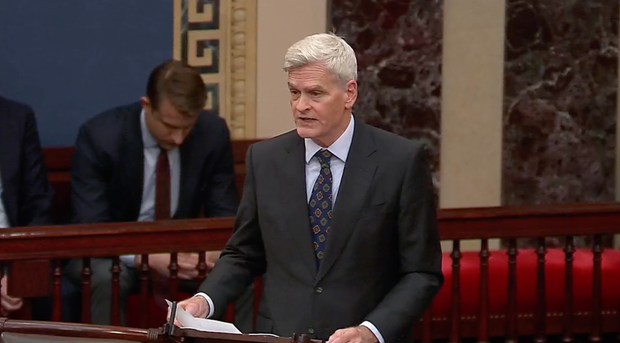
Addressing the Senate floor, Cassidy acknowledged that Blanche is not a perfect candidate but argued that the alternative would be less effective. He stated, “The choice is not between perfection and Mr. Blanche. It is between Mr. Blanche and another acting attorney general who may not run the department effectively under President Trump and who indeed may not be as good as Mr. Blanche.”
Blanche’s confirmation is expected to pass by a narrow margin. Although Republicans maintain control of the Senate, the party can only afford to lose the support of two GOP senators to secure the nomination, particularly given the absence of Senator Mitch McConnell. With Republican Senators Susan Collins of Maine and Lisa Murkowski of Alaska already opposing the appointment, Cassidy’s support serves as the decisive factor, as all Democrats are expected to vote against the nominee.
The Senate is currently working through a series of priorities before a scheduled five-week recess. It remains uncertain whether a final vote on Blanche will occur during this window, as expediting the process would require consent from the Democratic caucus.
In his remarks, Cassidy emphasized that the decision to support Blanche is based on specific circumstances rather than a referendum on President Trump. He warned that failing to confirm a permanent attorney general risks undermining progress in combating violent crime, human and drug trafficking, and fraud, adding, “This does not serve the American people well.”
President Trump nominated Blanche in June to replace Pam Bondi, who was ousted in April. Blanche, formerly the president’s personal defense lawyer, has served as the acting attorney general since Bondi’s departure. His path to confirmation faced significant hurdles, primarily due to his role in creating a $1.8 billion “anti-weaponization” fund intended to compensate individuals who claimed they were targeted by federal agencies.
Concerns were raised by lawmakers that the fund could potentially provide taxpayer-funded payouts to individuals convicted of assaulting law enforcement during the January 6, 2021, Capitol attack. Cassidy, who was one of seven Republicans to vote to convict Mr. Trump during his second impeachment trial, noted that he found Blanche’s approval of the fund and the granting of broad tax immunity to the president to be examples of “poor judgment.”
The “anti-weaponization” fund originated from a settlement agreement between the president and the IRS in May, which resolved a $10 billion civil lawsuit regarding the leak of his tax returns. In addition to the fund, the Justice Department had agreed to grant the president and his associates extensive immunity from tax audits and investigations.
To address these concerns and secure support from key Senate Judiciary Committee members, including John Cornyn of Texas and Thom Tillis of North Carolina, Blanche issued an order rescinding the May directive and clarifying the scope of the tax immunity deal. Following these concessions, the committee voted along party lines on Tuesday to advance his nomination.
Beyond the financial and immunity disputes, Blanche faced scrutiny regarding the Justice Department’s handling of over 3 million documents related to the investigation of convicted sex offender Jeffrey Epstein. He was also questioned about a meeting he held last year with Ghislaine Maxwell, who is currently serving a 20-year sentence for sex trafficking.
During his confirmation hearing, Blanche admitted that “mistakes were made” concerning the Epstein documents, which included unredacted personal information of trafficking victims. At the insistence of Senator Tillis, Blanche met with survivors of Epstein’s crimes last month. However, the meeting drew criticism from some survivors, with one participant characterizing the session as a “check-the-box exercise” intended to facilitate his confirmation rather than a genuine effort to address their concerns.
Trump on a charge of incitement of insurrection during his second impeachment trial in February 2021.
Trump’s perceived political enemies, though he added that “presidents of both parties have been guilty of this.”
“A never-ending cycle of prosecuting political enemies undermines the rule of law, degrades the public’s trust in our institutions, and makes our politics more extreme when we need to unite to solve the big problems of o
The president, whose first term had already ended, was acquitted by the upper chamber.
“A never-ending cycle of prosecuting political enemies undermines the rule of law, degrades the public’s trust in our institutions, and makes our politics more extreme when we need to unite to solve the big problems of our time.”
Source: CBS News