




























































A Memorandum of Understanding (MoU) intended to halt the conflict between the United States and Iran is scheduled to expire on Monday. There are currently few indications that either party intends to extend the agreement, which has been marred by mutual accusations of non-compliance since its inception.
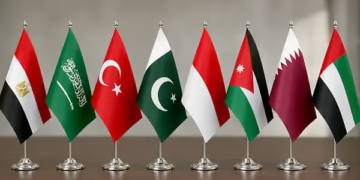
Iranian Foreign Minister Abbas Araghchi stated on Telegram this Saturday that Tehran has not yet decided to resume negotiations with the United States. While mediators from Qatar and Pakistan continue to facilitate communication, Araghchi noted that Iran is exploring a separate arrangement with Oman regarding shipping routes in the Strait of Hormuz, provided a political resolution can be achieved.
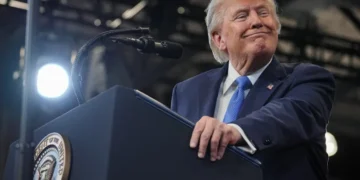
Conversely, President Donald Trump signaled a more aggressive stance, telling supporters in New York on Friday that the United States intends to claim the strategically vital Strait of Hormuz as its own territory. Treasury Secretary Scott Bessent added that the administration plans to implement unprecedented economic measures against Tehran.
The original agreement, signed on June 17 by Trump and Iranian President Masoud Pezeshkian following high-level talks in Pakistan, was designed to conclude over three months of warfare that resulted in thousands of deaths and disrupted global energy exports. The pact mandated an immediate and permanent cessation of military operations, with a final deal intended to be endorsed by the UN Security Council within 60 days.
Under the terms of the MoU, the United States was required to terminate its naval blockade within 30 days, withdraw forces from the vicinity of Iran following a final deal, and initiate a $300 billion reconstruction and development package. Additionally, Washington agreed to lift sanctions and unfreeze Iranian assets. In exchange, Iran committed to clearing mines from the Strait of Hormuz and allowing free passage for ships, while also reaffirming its intent to avoid nuclear weapons development.
Disputes over the agreement’s implementation surfaced almost immediately. By June 27, President Trump characterized Iranian strikes as a violation of the deal, while Tehran accused the US of breaching Article 1 of the MoU. By July 7, Trump declared the agreement over, leading to renewed US military strikes that killed at least 50 people. Iranian officials subsequently announced they were suspending their own commitments in response to what they termed a US violation.
Mostafa Khosh Khoshcheshm, a professor at the University of Applied Sciences in Tehran, told Al Jazeera that the ceasefire became obsolete due to the US failure to release assets, lift sanctions, or facilitate an Israeli withdrawal from southern Lebanon. He noted that, formally, the deadline has now arrived.
The expiration of the MoU carries different interpretations depending on the perspective. Araghchi argued that the Islamabad agreement represented the end of the war rather than a mere ceasefire, asserting that since the US violated the terms, there was no 60-day window requiring an extension.
Internal shifts within Iran suggest a hardening of their diplomatic and security posture. The recent appointment of former IRGC head Mohsen Rezaei to lead the Supreme National Security Council is viewed by analysts as an effort to better synchronize military and civilian operations. Experts suggest this move indicates that Tehran believes it holds the upper hand and may enter any future talks with expanded demands, including the denuclearization of Israel and the lifting of blockades in Yemen.
President Trump has largely dismissed the prospect of reconstruction payments to Iran, instead suggesting that Tehran should provide compensation to families of those affected by its past regional conflicts. Meanwhile, the Pentagon continues to assert control over the Strait of Hormuz, recently reporting that it fired upon a Panama-flagged vessel for allegedly violating the US blockade.
As the Monday deadline approaches, the future of the diplomatic process remains uncertain. While the US continues to escalate its rhetoric regarding economic warfare and territorial claims over the waterway, analysts like Barbara Slavin suggest that the administration has few remaining levers to exert further pressure on the Iranian government. The report also notes that here’s what you need to know as the MoU expires. The report also notes that especially oil and gas exports relied on globally, it was meant to bring an end to more than three months of war that had killed thousands and crippled commercial movement in the Gulf. The report also notes that iran, for its part, was to clear mines from the Strait of Hormuz and allow ships to pass “with no charge” for 60 days. The report also notes that the details of which would be laid out in a “final deal” to be backed by the UN, tehran also reaffirmed it would not seek nuclear weapons and would negotiate on issues such as enrichment. The report also notes that much of the dispute since its signing has centred on more basic issues, such as whether it was a ceasefire or a more permanent agreement and what each side was supposed to do, although the US and Iranian versions of the agreement differed slightly. The report also notes that and by June 27, Trump was calling Iranian strikes in the region “a foolish violation” of the deal, whether the entire agreement was still in effect soon became disputed. The report also notes that since then, the US has not fully lifted sanctions on Iran and Trump has scoffed at the idea of paying Iran for reconstruction, suggesting instead that Tehran pay compensation to families of protesters it had killed “over the last 50 years” as well as “all the people they have killed and gravely wounded with their roadside bombs and many conflicts”. The report also notes that what that means exactly depends on which side you ask, although the MoU is set to expire on Monday.
Source: Aljazeera