















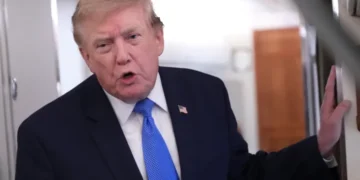








































Israeli forces have intensified their military operations in the Gaza Strip since the roadmap for a second stage of the Palestinian enclave’s “ceasefire” was announced last week. United States President Donald Trump described Hamas’s acceptance of the deal as a monumental step towards security and stability, yet the reality on the ground remains starkly different.
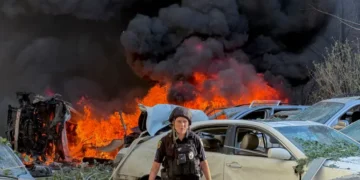
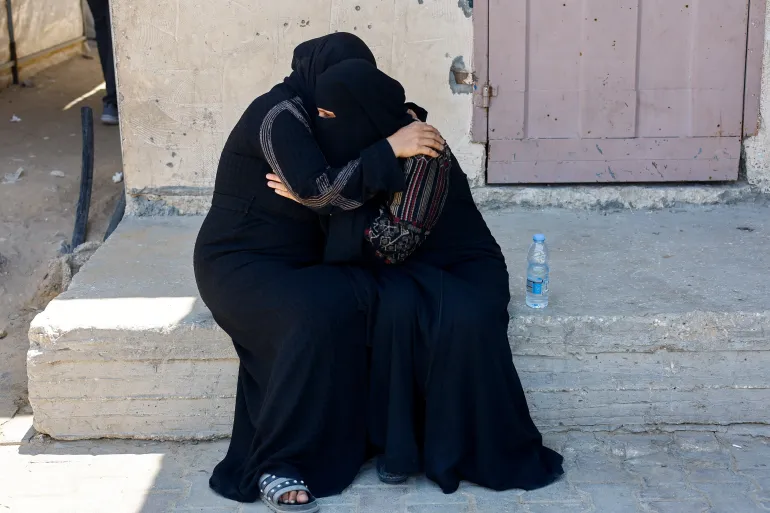
In Gaza, at least 19 Palestinians were killed on Saturday in Israeli attacks, bringing the weekend death toll to 26 people, including women and children. This stands in stark contrast to the diplomatic progress heralded by Washington. The Board of Peace and the International Stabilization Force (ISF), which are intended to manage post-war Gaza, had previously announced an agreement to implement the next phase of the “ceasefire” based on a detailed 15-point roadmap.
Despite Hamas agreeing to a phased disarmament, Israel’s government says it has “serious security concerns” about the plan, and there has been strong resistance from Israeli politicians to the deal. The continued bombardment of Gaza, contributing to Israel’s continued breaches of October’s “ceasefire” agreement, will likely threaten Trump’s peace plan and exacerbate the already dire humanitarian situation for Palestinians in the enclave.
While Hamas formally accepted the document, questions have been raised as to whether Palestinian factions might eventually walk away due to continuous Israeli attacks on Gaza. Eyad al-Qarra, a Palestinian political analyst based in Gaza, told Al Jazeera that this step would be an uncalculated risk for Hamas and other Palestinian groups.
“There is still hope that the factions will not reach this stage. Otherwise, it is feared that the price would be even higher, as Israel would exploit this to launch an even wider war on Gaza,” al-Qarra said. “It is vital for the factions not to give Israel any pretext or excuse to make it appear as though both sides are equally responsible for the failure.”
Rather than embracing the roadmap, the Israeli government has actively worked to impose stringent new parameters. Israeli media have reported that the government is demanding the total disarmament of Hamas and that weapons be handed over to a Western state. They also insist that no Palestinian authority should have control over the border crossings.
Doron Spielman, a spokesperson for Prime Minister Benjamin Netanyahu’s office, said Israeli forces would not withdraw until the complete demilitarisation of Hamas, which further complicates the process. “The priority for Hamas and other factions today is relieving the population, not restoring weapons or military workshops,” al-Qarra noted.
“However, while the factions agreed to limit these weapons under international or regional oversight to stop the war, they will never legitimise the complete elimination of the resistance,” al-Qarra added. He emphasized that an administrative committee cannot operate in thin air; it needs heavy machinery, open border crossings, and a suitable environment to rebuild infrastructure and schools.
“If an administrative committee operates in areas under Israeli military control, it will be viewed by the people as nothing more than a collaborating militia,” al-Qarra warned. He further noted that Israel believes one of Hamas’s sources of strength on the diplomatic level is its strong relationship with Qatar and Turkiye.
“Israel seeks to continue the killing, starvation and siege in the Strip, and to obstruct any actual, practical progress in the second phase of the agreement, without explicitly announcing its rejection of the roadmap,” analyst Hani Shehadeh stated. He suggested that the Israeli government is strategically stalling to maintain its domestic political standing.
“The government of Benjamin Netanyahu will continue its policy of procrastination, evasion, and disruption until the date of the Israeli elections on October 27, because any serious implementation of the agreed-upon roadmap will lead to electoral damage for Netanyahu,” Shehadeh added. This view is echoed by other observers who argue that the coalition views the agreement as a setback to their long-term objectives in the territory.
“Netanyahu and the government coalition see accepting the agreement as a political and electoral setback because it preserves the Palestinians’ principle of the right to resist, prevents displacement, and opens the door to rebuilding Gaza,” political analyst al-Hila told Al Jazeera. Meanwhile, international officials continue to call for restraint, with Mladenov noting that two days of strikes have destroyed critical medical supplies.
“Achieving a lasting peace is hard but achievable if everyone makes their best efforts,” Mladenov wrote, reminding both sides of their binding obligations. Ultimately, al-Qarra concluded, “The issue is not about trust, but rather the ability to neutralise the United States from being a full partner with Israel.”
Consequently, Israel’s refusal to formalise its position means the critical 14-day negotiation period for implementation protocols remains entirely frozen, he added.
The Israeli military also refuses to withdraw from the first “Yellow Line” area, a territory that constitutes approximately 52 percent of the entire Gaza Strip.
Mtanes Shehadeh, an expert on Israeli affairs, observed that the government is treating the Gaza understandings strictly as a tactical manoeuvre.
Netanyahu is also attempting to avoid a public clash with Trump by appeasing him, possibly by allowing limited increases in aid into Gaza while stalling on core issues such as the military withdrawal.
Political analyst Ahmed al-Hila echoed this assessment, anticipating a prolonged period of deliberate ambiguity designed to undermine the agreement through military force on the ground.
The roadmap, conversely, calls for empowering an independent, technocratic Palestinian administration to manage civilian affairs and reconstruction in the enclave.
Al-Qarra says that granting Israel operational military freedom renders any Palestinian administration entirely meaningless.
“Freedom of Israeli action in Gaza means, in practice, a full occupation.
Israel has also lodged formal objections against the participation of Qatar and Turkiye in the verification mechanisms of the roadmap and demanded their exclusion from the oversight process.
“By inciting against Qatar’s role, Tel Aviv is trying to isolate the Palestinian side and strip it of any regional political backing that could guarantee Israel’s compliance with its obligations.”
As the diplomatic process stalls, trust in the US role as an honest mediator continues to erode.
Taking to the social media platform X, Nickolay Mladenov, the lead envoy for the Board of Peace, condemned the military escalation, although he refrained from mentioning Israel by name as the perpetrator of the attacks.
Commenting on the US role, al-Qarra emphasised that the Palestinian leadership is under no illusions regarding Washington’s bias.
“The factions understand the broader regional conflict.
Their goal is to maintain communication, supply data on Israeli violations, and prevent Washington from providing a green light for Israel to completely destroy what remains of Gaza.”
Source: Aljazeera