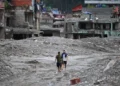




































































Rescue teams are working continuously to reach workers believed to be trapped inside hydropower facilities, more than a week after devastating flash floods swept through the Himalayas. The disaster, which scientists attribute to a glacier collapse near the Langtang Lirung peak, sent a massive surge of water, rocks, and mud through villages, roads, and bridges across Nepal and Tibet.
Official figures released on Thursday confirm that the death toll has surpassed 1,270, with more than 4,700 people still reported missing. Nepal’s National Disaster Risk Reduction and Management Authority (NDRRMA) reported that 1,252 bodies have been recovered within the country, while 4,216 individuals remain unaccounted for. In neighboring Tibet, authorities have confirmed 21 deaths and 541 missing persons.
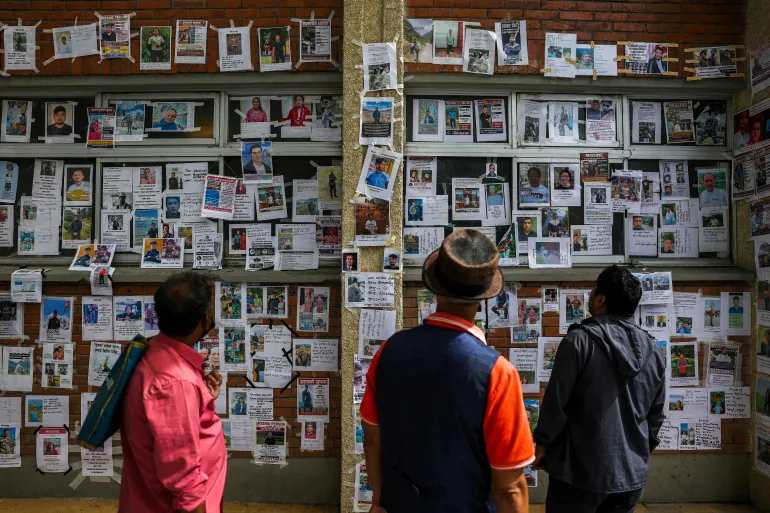
In the hard-hit Rasuwa district, engineering crews are using bulldozers to clear massive debris piles from tunnel entrances. Sanjay Kc, an officer with the Nepalese army, expressed cautious optimism regarding potential survivors, noting that the scale of the power house interior suggests it may not be entirely submerged. Meanwhile, families of the missing continue to gather daily in hopes of news. Pratik Rana, whose father is among the missing engineers, described the daily cycle of hope and fading resolve as the search persists.
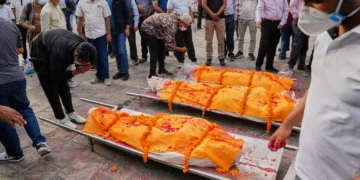
Authorities are employing diverse rescue methods, including helicopters and zip lines, to access remote, isolated communities. The United Nations Development Programme estimates that the floods and subsequent mudflows have displaced at least 2.2 million tonnes of debris. In Kathmandu, forensic teams are struggling to identify recovered remains, many of which are in advanced states of decomposition. Experts noted that while items like jewelry and tattoos assist in identification, the condition of the bodies presents significant challenges.
Prime Minister Balendra Shah announced on Wednesday that the government is balancing ongoing search operations with the initiation of reconstruction and rehabilitation efforts. Dharma Raj Upreti of the NDRRMA stated that approximately 20,000 homes require rebuilding, including 7,500 that were completely destroyed. Officials are prioritizing the relocation of these communities to safer areas to mitigate future risks, rather than rebuilding in vulnerable, flood-prone zones.
As of Monday, the United Nations reported that more than 3,400 displaced people are currently sheltering in 27 sites, primarily schools, across the Nuwakot and Rasuwa districts. Amid the recovery efforts, Foreign Minister Shisir Khanal has emphasized the responsibility of major greenhouse gas emitters to provide compensation to vulnerable nations. The government has formally submitted a climate compensation claim letter to international partners to address the long-term impact of the disaster. The report also notes that “Because it’s a big power house inside, so it’s a big room, and we feel that the whole power house is not flooded,” he told. The report also notes that families of those missing are gathering each morning hoping for news about their loved ones. The report also notes that “Every day I come here hoping to find my father,” said Pratik Rana, the son of a missing engineer. The report also notes that “But every day at sunset I feel my hope fades away… [A] father is equally important for everyone, but for me he was a precious part of my life.”. The report also notes that reporting from a DNA testing facility in the city, said many of the bodies being found are in a state of decomposition, jessica Washington.
Source: Al Jazeera