
































































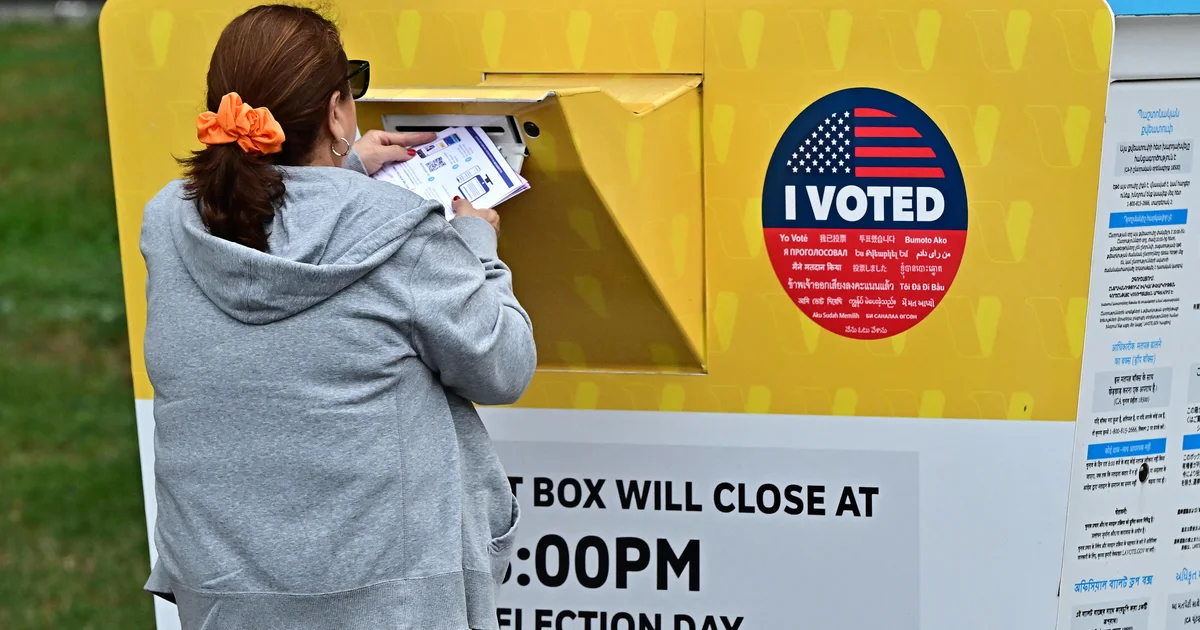
A federal judge in Boston has temporarily blocked the U.S. Postal Service from enforcing new regulations regarding mail-in voting for the upcoming midterm elections. U.S. District Judge Indira Talwani issued an 11-page order granting a 14-day stay on several key provisions of the rule, which was published by the agency just last week.
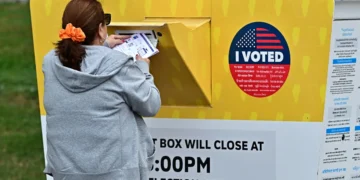
The legal challenge was brought by a coalition of two dozen states and the District of Columbia, alongside various voting rights organizations. The plaintiffs argued that the Postal Service lacks the constitutional authority to dictate election administration, a power they contend belongs exclusively to the states. The new requirements, issued in response to an executive order from President Trump, mandated specific design features for ballot envelopes, such as trackable barcodes, and required election officials to upload recipient data to an online portal.
In her ruling, Judge Talwani emphasized the severe logistical burden the regulation placed on election administrators. She noted that many states have already finalized their ballot designs and are legally obligated to distribute them to voters within days. “Based on the record presently before the court, Plaintiff States face irreparable harm where they are required to comply with a likely unconstitutional regulation for which compliance is practically impossible as to the 2026 midterm elections, now little more than two months away,” Talwani wrote.
The judge further highlighted that states currently lack the time and financial resources to redesign ballots, update election management software, train staff on the new USPS portal, and process citizen data before the November vote. She concluded that the states are likely to succeed on the merits of their argument that the Postal Service exceeded its delegated authority.
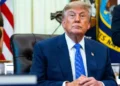
This litigation follows a broader legal conflict regarding President Trump’s March executive order, which sought to restrict mail-in voting by directing the Department of Homeland Security to compile “State Citizenship Lists” and instructing the attorney general to prioritize investigations into potential voter fraud. While the Supreme Court recently halted a lower court decision that had blocked parts of that executive order, the high court’s ruling was procedural and did not address the merits of the mail-in ballot restrictions.
The Justice Department had urged the court to allow the rules to proceed, arguing that the requirements were merely “modest informational” measures that would not interfere with state election laws. Government lawyers contended that the rule is a regulation of the U.S. mail system rather than a federal takeover of election administration. They warned that blocking the rule now could create further confusion if it were later allowed to take effect closer to the election date.
The Postal Service has maintained that it does not intend to play any role in determining voter eligibility, maintaining voter rolls, or counting ballots. However, the states argued that the rule would effectively disenfranchise voters by creating insurmountable administrative hurdles. “If Plaintiff States are unable to comply with the Final Rule, an outcome that seems unavoidable given the timeframe, they will violate their obligations under the Constitution and State laws to administer elections,” Talwani stated.
The upcoming midterm elections are critical, as they will determine which party holds the majority in the House and Senate. With the first mail-in ballots scheduled to be sent to military and overseas voters in North Carolina on September 4, and other states following shortly thereafter, the timing of the court’s intervention is significant.
The Justice Department is expected to appeal the decision, potentially setting the stage for the dispute to reach the Supreme Court once more. The current order provides a temporary reprieve for election officials, though the long-term status of the Postal Service’s requirements remains uncertain as the legal battle continues. The report also notes that citizens who are eligible to vote and instructs the attorney general to prioritize investigations and prosecutions against election officials who issue ballots of people ineligible to vote. The report also notes that monday’s Supreme Court ruling involved an earlier lawsuit filed by 23 Democratic-led states that sought to block Mr. The report also notes that 4, and several other states will start making them available in mid-September. The report also notes that election officials had to “accomplish multiple Herculean tasks, each necessary to address the disruption caused by the Rule, in a matter of weeks, with limited resources, the states had warned in their lawsuit that as a result of the measure. The report also notes that 24 states sue to block new Postal Service rules for mail voting. The report also notes that judge considers Kennedy Center board’s push to put Trump’s name back on building. The report also notes that fired Stars and Stripes journalists sue Hegseth and Pentagon spokesperson. The report also notes that nick Fuentes’s Plan to ‘Infiltrate Politics’ and Subvert the GOP.
Source: CBS News