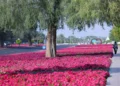



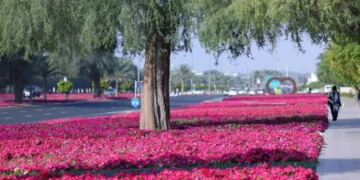

















































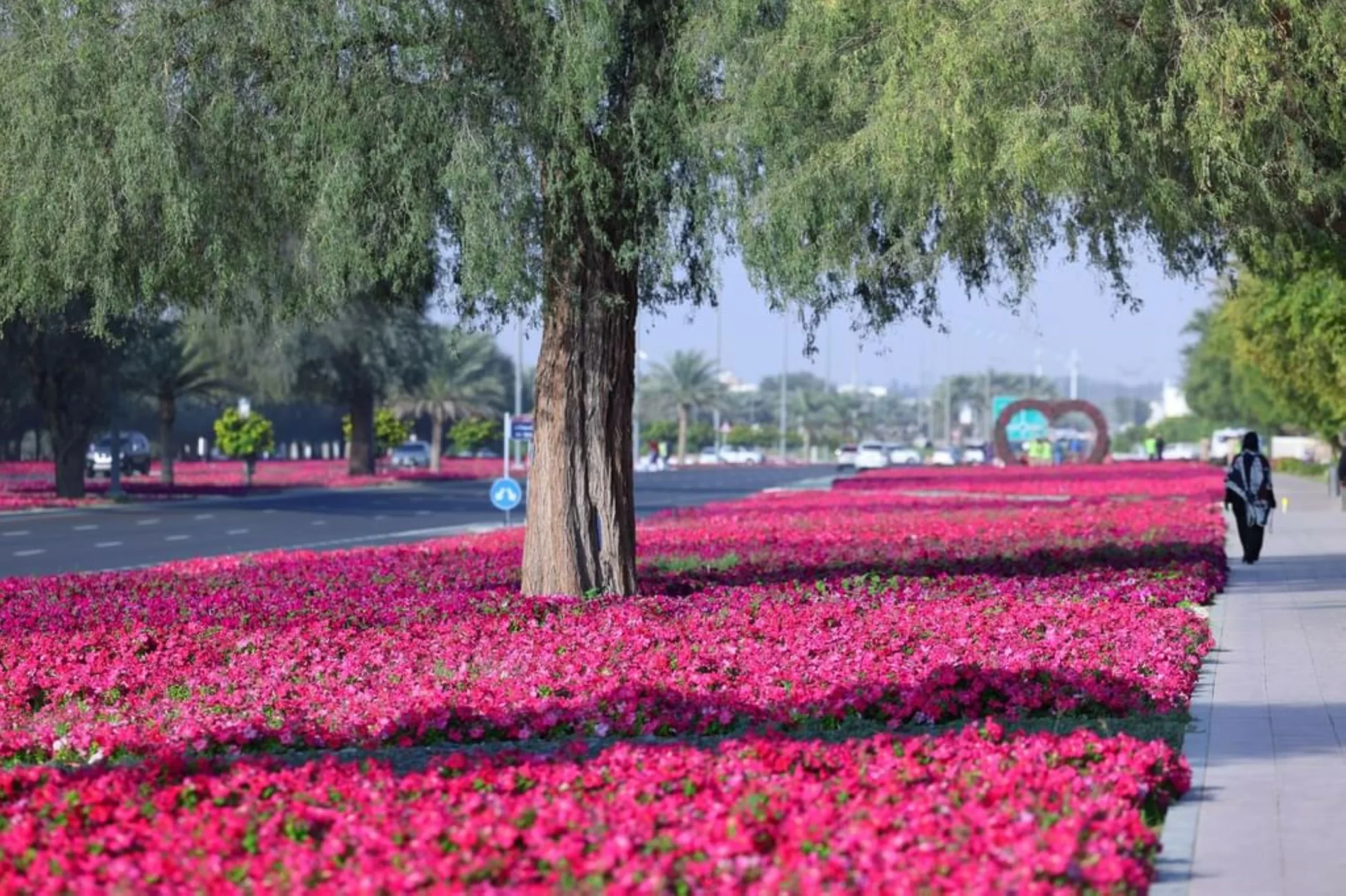
Al Ain, frequently referred to as “Dar Al Zein,” continues to solidify its reputation as one of the region’s greenest cities through an extensive urban beautification program. Each morning, the city’s public squares, main thoroughfares, and pedestrian walkways are transformed by vibrant floral displays, reflecting a long-term commitment to sustainable urban development and community wellbeing.
The scale of this horticultural effort is significant, with municipal nurseries producing more than 5.5 million seedlings annually. These plants are distributed across flowerbeds covering nearly 400,000 square metres, resulting in approximately 99 million flowers that provide continuous, year-round color. This initiative represents one of the largest landscaping frameworks in the region, ensuring that the city’s visual character remains consistently refreshed.
To maintain this aesthetic, the municipality employs a tailored cultivation framework featuring 30 distinct species, 40 varieties, and 20 precise color shades. Designers carefully map out patterns using white, red, yellow, orange, pink, violet, and blue to ensure visual harmony. The diverse plant palette includes vinca, petunia, amaranthus, zinnia, lantana, marigold, portulaca, begonia, stock, hollyhock, salvia, delphinium, gerbera, aster, celosia, geranium, viola, cosmos, sunflower, freesia, chrysanthemum, and dahlia.
The selection process for these plants is rigorous, focusing on technical criteria such as heat tolerance, bloom duration, color density, and water efficiency. By adhering to international best practices in ornamental horticulture, the city integrates climate-resilient varieties with geometric arrangements to create a sustainable environment that aligns with Abu Dhabi’s broader development targets.
Operational cycles are synchronized with regional seasonal shifts. Summer planting begins in mid-May, utilizing species capable of withstanding high temperatures, while winter planting commences in late December to maximize the variety and range of colors. The process involves clearing previous growth, conditioning the soil, and applying organic fertilization before transplanting the nursery-grown seedlings.
Maintenance is supported by automated precision irrigation and routine fertilization to preserve the quality of the beds. The municipality continues to innovate by introducing new floral varieties, updating landscape geometry, and expanding the use of automated technology. By incorporating both horizontal and vertical arrangements alongside ornamental structures, the city creates distinctive landmarks that enhance the overall quality of urban life.
Source: Gulf Today