




































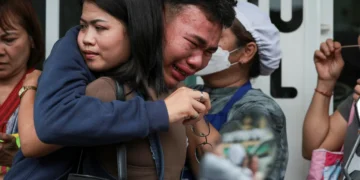







































The United States resumed deportation flights to Haiti on Thursday, marking the first such mass return since the Trump administration successfully challenged the Temporary Protected Status (TPS) program. More than 160 individuals were flown to the northern city of Cap-Haitien, as the primary international airport in Port-au-Prince remains closed to U.S. commercial traffic due to severe gang violence.
The deportees, many of whom wore white, arrived under tight security. Jean Négot Bonheur Delva, director general of Haiti’s National Office of Migration, confirmed the group included both former TPS holders and individuals who had completed prison sentences in the U.S. Delva emphasized that the Haitian government did not request these returns, stating, “It is not the Haitian state that asks for them to be sent back.”
Upon arrival, immigration officials provided the returnees with small stipends of $65 and basic provisions. Delva noted that the government intends to assist those unable to reach their homes immediately by hosting them in secure facilities. He expressed concern regarding the safety of the returnees, particularly those attempting to travel to Haiti’s southern or western regions, where gang-controlled routes pose significant risks to travelers.
One deportee, identified as Jean Diane Louis, told reporters he had lived in the U.S. since age five and had served a 19-year prison sentence for a crime he claimed he did not commit. “Then ICE came and took me without questioning me,” Louis said. “They just sent me here.”
The mass deportation follows a series of legal developments, including a June Supreme Court ruling that allowed the termination of the TPS program for approximately 1 million people from various nations. By early August, a federal judge in Washington, D.C., finalized the lifting of an order that had previously shielded Haitian TPS holders from deportation.
Humanitarian groups have strongly criticized the move, citing the volatile security situation in Haiti. The Group Supporting Refugees and Returnees issued a statement declaring that the country is ill-equipped to manage the influx of migrants. The organization highlighted that over 140,000 Haitians have already been returned from neighboring countries, such as the Dominican Republic, during the first half of the year, often without adequate government support systems in place.
The security crisis in Haiti remains dire, with gang violence displacing an estimated 1.5 million people. United Nations data indicates that more than 3,100 people were killed and over 1,100 injured in the first six months of the year alone. Activists warn that many deportees face family separation and the loss of the community ties they had established during their time in the U.S.
Domestic tensions regarding these policies are also rising. In Springfield, Ohio, local authorities recently arrested a prominent Haitian pastor, Gilbert Joubert Adrien, along with another Haitian man, during an immigration enforcement operation. Marjory Wentworth, a spokesperson for the local support group Springfield G92, noted a heightened presence of federal immigration agents in the city.
Ohio Governor Mike DeWine has publicly opposed the deportations, describing the policy as a mistake that threatens the state’s economy. DeWine noted that many Haitian residents in Springfield have become vital members of the workforce, filling essential roles in a city that has struggled economically. “Haiti is hell today,” DeWine said, arguing that deportees are being sent back to a dangerous environment where they lack support.
Flight data from Human Rights First’s ICE Flight Monitor indicates that deportation operations have been ramping up since late 2025, with flights frequently originating from Alexandria, Louisiana, and stopping in Miami before reaching Cap-Haitien. As the situation remains fluid, advocates fear the long-term impact on the thousands of Haitians who may now face forced return to a country currently struggling with extreme poverty and widespread instability. The report also notes that deported more than 160 people to Haiti on Thursday for the first time since the Trump administration won a legal battle to end Temporary Protected Status for some 350,000 Haitians. The report also notes that with some fearing being targeted by gangs that control an estimated 70% of Port-au-Prince and swaths of land beyond, nearly all declined to talk. The report also notes that … We welcome them with the aim of accompanying them to their home. The report also notes that a dangerous journey because gangs control the main routes leading to that area and are known to randomly open fire on vehicles passing through, he said that several deportees planned to travel to Haiti’s southern region. The report also notes that where his mother and father live, he said the government would attempt to reunify him with any potential relatives in Haiti or the Dominican Republic. The report also notes that immigration officials in Haiti on Thursday offered deportees a maximum of $65 and something to drink and eat.
Source: CBS News