







































































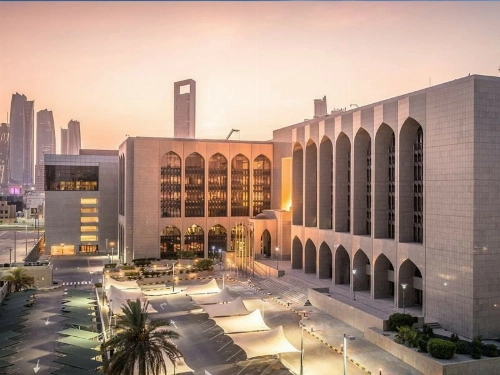
The Central Bank of the UAE (CBUAE) has released its Financial Stability Report for 2025, detailing a period of significant growth and stability for the nation’s financial and banking sectors. The report attributes this success to robust performance, sufficient liquidity, and healthy capital levels, all of which have bolstered the banking system’s ability to support the broader national economy.
Financial data for the year ending 2025 shows that the banking system’s total assets climbed by 17.1 percent, reaching Dhs5.3 trillion. This expansion was mirrored by a 17.8 percent increase in the loan portfolio, a trend primarily fueled by rising domestic lending activity within the retail and private corporate sectors. Profitability also remained strong, with net profits rising by 11.7 percent to hit Dhs90.8 billion, bolstered by higher total operating income and consistent deposit growth.
Asset quality showed marked improvement throughout the year. The non-performing loan (NPL) ratio dropped to 3.3 percent in 2025, a notable decline from 4.7 percent in 2024 and 8.2 percent in 2020. Furthermore, the banking system maintained a solid capital buffer, with the Capital Adequacy Ratio (CAR) standing at 17.0 percent at the end of 2025, comfortably exceeding minimum regulatory requirements.
Supervisory stress tests conducted for 2025 confirmed that the sector is well-positioned to withstand severe economic and financial shocks. Even under a simulated adverse scenario, the average Common Equity Tier 1 (CET1) capital ratio remained above regulatory minimums, dipping only to 11.1 percent from a baseline of 14.1 percent at its lowest point. Beyond traditional banking, the report noted the continued resilience of Islamic banking and the insurance sector.
The CBUAE also emphasized the ongoing evolution of the nation’s financial infrastructure through the Financial Infrastructure Transformation (FIT) Programme. Key developments include the Aani instant payments platform, the Jaywan national card payment scheme, and advancements in cross-border payment capabilities, all of which are designed to enhance system efficiency and support digital transformation.
Khaled Mohamed Balama, Governor of the CBUAE, stated that the report confirms the financial system’s strength and its capacity to efficiently support the national economy. He added that the Central Bank remains committed to refining its supervisory and prudential frameworks to better prepare for future challenges, ensuring long-term financial stability and sustainable economic growth.
Source: Gulf Today