





































































A parasitic illness outbreak linked to iceberg lettuce has now spread across 15 states, U.S. health officials confirmed on Wednesday. The Centers for Disease Control and Prevention (CDC) reported that the number of states tied to this deadly outbreak has expanded from nine to 15, marking a significant escalation in the public health crisis.
The newly affected states include Arkansas, Iowa, Missouri, Nebraska, New Hampshire, and North Carolina. These join the previously identified list of Illinois, Indiana, Kansas, Kentucky, Michigan, Ohio, Oklahoma, Pennsylvania, and West Virginia. While investigators initially narrowed their focus to lettuce served at Taco Bell, federal officials have since identified Taylor Farms as the primary source of the contaminated produce, prompting the company to recall iceberg lettuce grown in central Mexico.
There are several reasons why cyclospora outbreaks can be notoriously difficult to investigate and contain, according to Dr. Juan Luis Marquez, medical director of the Washtenaw County and Livingston County health departments in Michigan. Understanding the transmission patterns requires extensive resources that are currently strained.
Marquez, who also serves as an adjunct public health professor at the University of Michigan, explained that the nature of the parasite creates significant hurdles. It can take weeks between the initial exposure and the onset of symptoms, making it harder to analyze the parasite in laboratories and requiring a massive effort to interview every sick individual to identify common exposures.
Furthermore, systemic issues complicate the response. Marquez noted that there have been staffing cuts at all levels of public health—federal, local, and state—meaning there are fewer resources and less capacity generally available to handle such large-scale investigations.
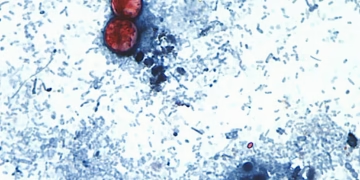
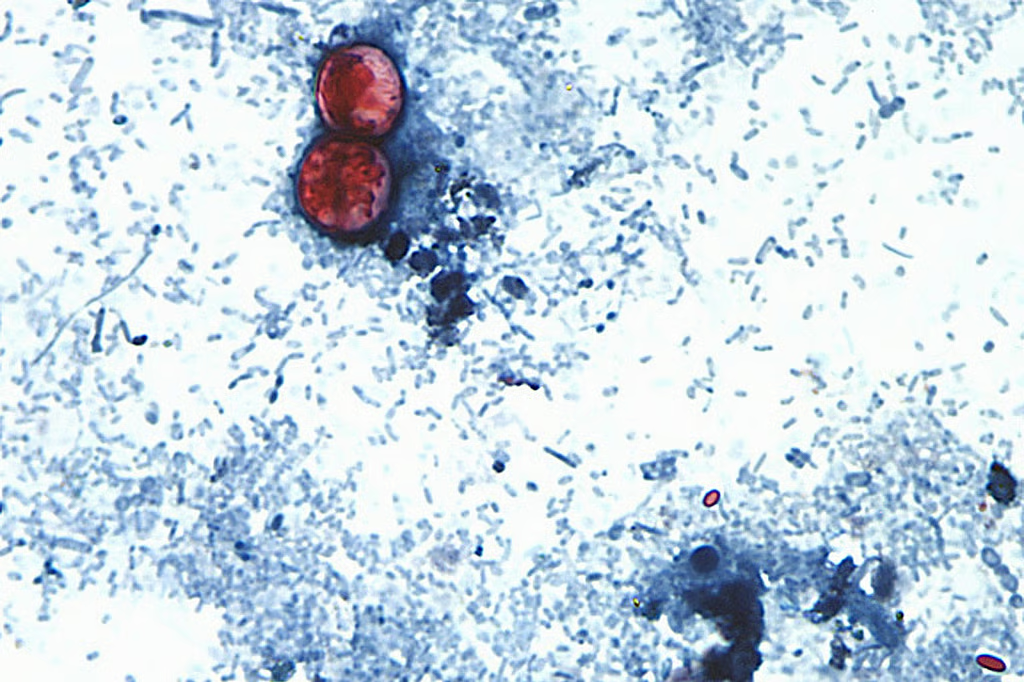
Cyclospora is a microscopic, spherical parasite that typically causes watery diarrhea, often characterized by frequent and sometimes explosive bowel movements. These heat-loving parasites infect the bowels and spread through feces, with outbreaks occurring most frequently during the late spring and summer months.
While cyclosporiasis is generally less common than foodborne illnesses caused by pathogens like salmonella or E. coli, the current scale of infection is unprecedented. The previous record for U.S. infections occurred in 2019, when approximately 4,700 cases were reported. This year has far surpassed that figure, with Michigan alone reporting more than 12,000 cases, including two deaths.
When accounting for all states that have reported cases, the national total now stands at over 25,000. The FDA is currently tracking five separate ongoing cyclospora outbreaks, though the 15-state event remains the largest by a wide margin. No specific products have been linked to the other ongoing outbreaks, including one that has already sickened 115 people.
As cases continue to rise, health officials are urging vigilance. The situation remains fluid, and investigators are continuing to probe how many additional cases might be linked to a common contaminated source as they work to contain the spread of the parasite.
Cyclospora cases have been reported in at least 47 states this year, and investigators have continued to probe how many could be linked to a common contaminated source.
Source: Gulf News