




































































Indian expatriates living in the UAE are closely monitoring a pending decision from the Indian government regarding a significant increase in passport renewal fees. This follows a recent directive from the Delhi High Court, which ordered the Union government to consider a petition challenging the new charges within a three-week window.
The legal challenge was initiated by the Kerala chapter of the Pravasi Legal Cell (PLC) through a Public Interest Litigation (PIL). The petition argues that the revised fee structure, implemented under the Passports (Amendment) Rules, 2026, imposes an unfair financial burden on overseas citizens, particularly those in the blue-collar workforce.
On July 22, the Delhi High Court heard the case and instructed the Union of India to treat the PIL as a formal representation. The court requested that the government evaluate the grievances raised and reach an appropriate decision, preferably within three weeks, while ensuring the petitioner is informed of the outcome.
With the court-set deadline approaching, members of the Pravasi Legal Cell’s UAE chapter remain optimistic that the government will reconsider the hike. TN Krishna Kumar, president of the organisation’s Dubai wing, noted that the group has been advocating for the rights of overseas Indians for over a decade.
Founded by Global President Adv Jose Abraham, the Pravasi Legal Cell consists of retired judges, advocates, and social activists dedicated to legal empowerment. Since 2009, the group has consistently raised issues concerning Indian expats, often turning to the judiciary when administrative channels fail to provide relief.
Whenever the authorities did not respond to genuine concerns, we approached the courts and have received favourable verdicts on many occasions, Kumar explained. The organisation remains committed to this path, and their advocates will continue to follow up the matter until a resolution is reached.
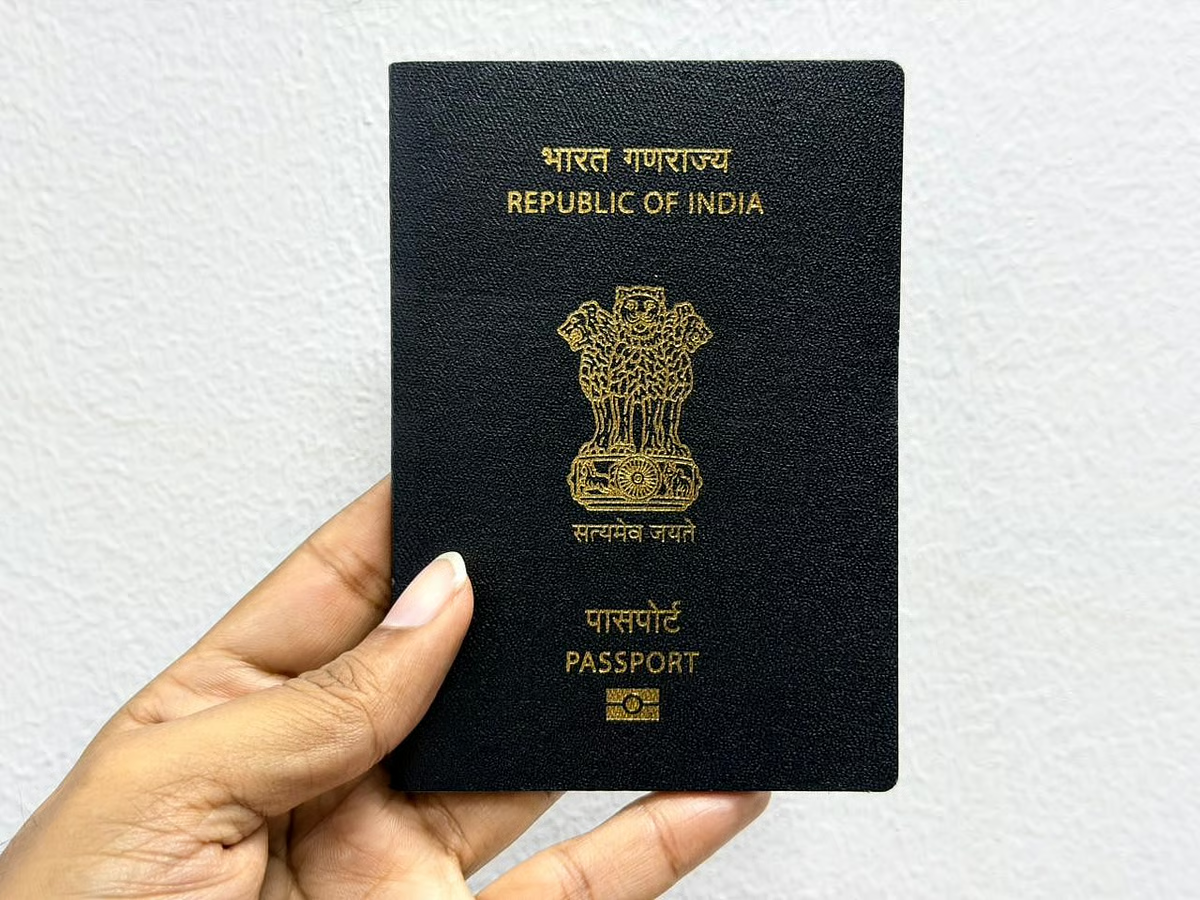
Currently, the total cost for renewing a passport in the UAE stands at Dh477, which includes service and community fund fees. This represents a significant jump from previous rates, creating a financial strain for many low-income workers who earn between Dh800 and Dh1,000 per month.
People here are among the worst affected by these changes, Kumar stated. For workers and low-income families, this is a very substantial amount. Many struggle to make ends meet, and hundreds of thousands of workers depend on renewing their passports from within the UAE.
The UAE is currently home to approximately 4.5 million Indians. Prasad Sreedharan, a PLC member based in Ras Al Khaimah, emphasized that the legal route was a last resort. We had submitted two representations to the Ministry, but there was no response. That is why the PIL was filed.
The Delhi High Court took up the matter immediately and directed the government to respond within three weeks. PLC members across the Gulf are now waiting for the Ministry of External Affairs to provide a formal response to the court’s directive.
The organisation maintains chapters in countries including Oman, Bahrain, Qatar, Saudi Arabia, the UK, and Australia, with the Delhi head office coordinating the global legal effort. They hope the government’s review will lead to a more affordable fee structure.
If the government’s response is not satisfactory, we will challenge it again before the Delhi High Court, Kumar confirmed. The group remains hopeful that the government will revoke the current fee structure in light of the court’s intervention and the economic reality faced by the diaspora.
With less than 10 days left before the Centre’s court-set deadline, members of Pravasi Legal Cell’s UAE chapter say they remain hopeful that the government will revise the steep hike in passport service fees.
It is a sharp increase and simply not affordable for many expat workers earning Dh800-Dh1,00 salary,” he pointed out.
The UAE is now home to 4.5million Indians, according to the Indian Embassy in Abu Dhabi.
Members of the community group Pravasi Legal Cell (PLC), which moved the Public Interest Litigation (PIL), said the court’s direction has renewed hopes among overseas Indians, especially low-income workers who they say have been hit hardest by the higher passport fees that came into effect on July 1.
As first reported by, several community volunteers, followed by expat organisations, had demanded a revision, especially for blue-collar workers and low-income families.
Many workers have also lost jobs because of the regional situation, making the increase even harder to bear.”
“We are expecting the government to reduce the fee, at least for labour categories as sought in the petition.
Indians in UAE demand permanent fix to passport crisis
India govt challenges HC ruling on consular services
Source: Gulf News