



































































The UAE gold jewellery sector experienced a significant downturn in the second quarter of 2026, with demand falling 28 per cent year-on-year to 5.6 tonnes, down from 7.7 tonnes during the same period in 2025. According to data from the World Gold Council, this decline was primarily driven by the impact of regional geopolitical tensions and a reduction in tourist-driven consumption. Despite this annual decline, there was a notable recovery on a quarter-on-quarter basis, with jewellery demand rising by 21.7 per cent as the market adjusted from the record-high price levels observed earlier in January.
The precious metal reached an all-time high of $5,589.38 per ounce on January 28, 2026. This peak occurred during a volatile trading session that saw prices jump by more than $300, a surge largely attributed to escalating tensions between the United States and Iran, including threats of a major military strike. This period of extreme price sensitivity significantly influenced consumer purchasing patterns throughout the first half of the year.
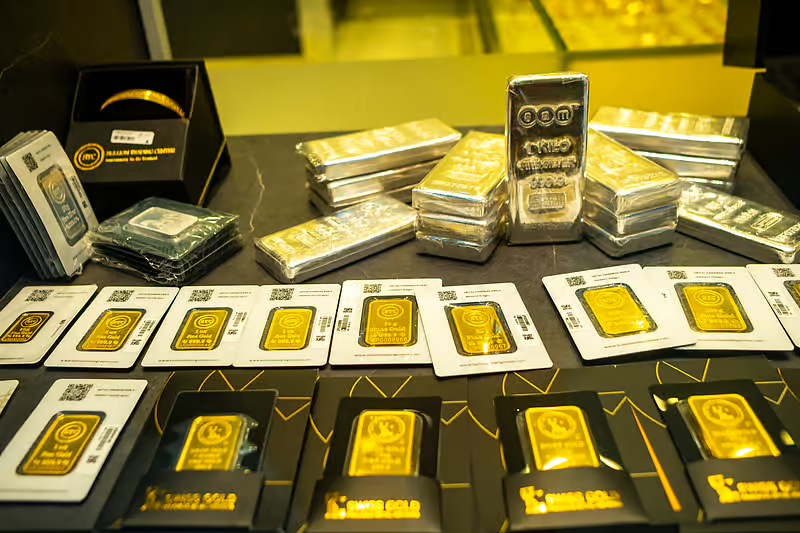
In contrast to the jewellery segment, the market for gold bars and coins demonstrated resilience, bucking the downward trend. Demand for these investment-grade products climbed 30 per cent year-on-year to 5.3 tonnes in the second quarter of 2026, compared to 4.1 tonnes in the same period of the previous year. Furthermore, quarter-on-quarter demand for gold coins and bars in the UAE jumped by 32.5 per cent, highlighting a shift in consumer preference toward tangible assets during uncertain times.
Gold coins and bars remain a favored investment choice in the UAE, rooted in a blend of cultural and financial motivations. For South Asian, Arab, and other expatriate communities, gold serves as a traditional store of value passed down through generations, deeply integrated into weddings, festivals, and family savings practices. Financially, these assets are utilized as a hedge against inflation and currency volatility, particularly during periods of geopolitical instability or equity market fluctuations. Many residents favor physical gold over paper-based investments like ETFs due to the benefits of direct ownership, portability, and liquidity, as these items can be easily resold or used as collateral.
The broader precious metal market has trended lower following the onset of the Middle East conflict, as rising oil prices have intensified inflation concerns within the US economy. As of Monday evening, spot gold was trading at $4,026 per ounce, marking a decline of 1.24 per cent. In the local UAE market, 24K and 22K gold prices were quoted at Dh488.25 and Dh452.0 per gram, respectively, at the market opening.
Simon-Peter Massabni, head of business development at xs.com, noted that the fundamental outlook for gold remains inextricably linked to the trajectory of inflation, US monetary policy, the strength of the dollar, and real bond yields. Massabni maintains that the outlook remains tilted toward a continuation of a bullish trend over the medium and long term, though he anticipates strong corrective waves along the way. He suggested that investors should not rule out new all-time highs if current supportive fundamentals persist, warning that the greater risk may be underestimating the broader uptrend due to short-term corrections.
Massabni advised against chasing gold higher during every rally, suggesting that a more disciplined approach involves waiting for areas of consolidation and re-entry while utilizing technical levels to define potential opportunities and manage risk. He views gold as entering a pivotal phase that could define its market trajectory for years to come. If the current movement is merely a correction within a longer-term bull market, today’s prices could eventually be viewed as a period of accumulation before another major advance.
However, Massabni cautioned that if gold successfully breaks through key resistance levels and establishes sustained trading above previous highs, the market could transition from a rally driven by fear and hedging into a new phase characterized by a global repricing of the asset. He concluded that gold remains an asset with strong structural drivers for further gains, emphasizing that disciplined risk management and the confirmation of technical signals are the most critical factors for navigating the next stage of the market.
Source: Khaleej Times