








































































On August 28, United States President Donald Trump announced what he described as the biggest oil deal in world history, a partnership with Venezuela that he claimed would more than double US oil reserves and lead to substantially lower gas prices for all Americans. The agreement centers on a private joint venture with North American Blue Energy Partners (NABEP), a firm owned by Venezuelan billionaire and former Hugo Chavez ally Alejandro Betancourt.
Under the terms of the arrangement, the Pentagon’s Office of Strategic Capital will hold a 35 percent stake in NABEP. The White House stated that the venture will be supported by reputable US auditors, lawyers, and advisors. The administration expects the project to process millions of barrels of new Venezuelan output through US refineries using American infrastructure, a move intended to support domestic investment and create thousands of jobs.
Venezuela holds the world’s largest proven oil reserves, estimated at 303 billion barrels, or roughly 17 percent of the global total. The new deal grants the US control over more than 65 billion barrels of these reserves. Additionally, the US has secured a guarantee to purchase 20 percent of the venture’s output at cost. The project is projected to produce approximately 200,000 barrels of crude oil per day, a capacity increase intended to bolster US production amid global supply volatility.
This initiative arrives as the US continues to import significant quantities of Venezuelan crude. In August, US Under Secretary of Energy Kyle Haustveit noted that roughly 500,000 barrels per day (bpd)—about 40 percent of Venezuela’s 1.25 million bpd national output—are currently moving to the United States. This import volume has seen a slight increase since the January capture of President Nicolas Maduro by US forces, after which he was flown to the United States. Venezuela’s interim President Delcy Rodriguez has publicly welcomed the deal, viewing it as a vital source of revenue for the state treasury.
Despite the administration’s optimistic projections, market data suggests that crude prices have trended upward since the announcement. Johannes Rauball, a senior analyst at Kpler, observed that before the agreement, West Texas Intermediate (WTI) traded between $83 and $86 per barrel, while Brent crude sat lower. Since the deal was unveiled, WTI has pushed past $90 and Brent has topped $95 per barrel. By Thursday morning, WTI futures had climbed an additional 61 cents to $90.83, driven largely by geopolitical risks and supply disruptions linked to Iran’s blockade of the Strait of Hormuz.
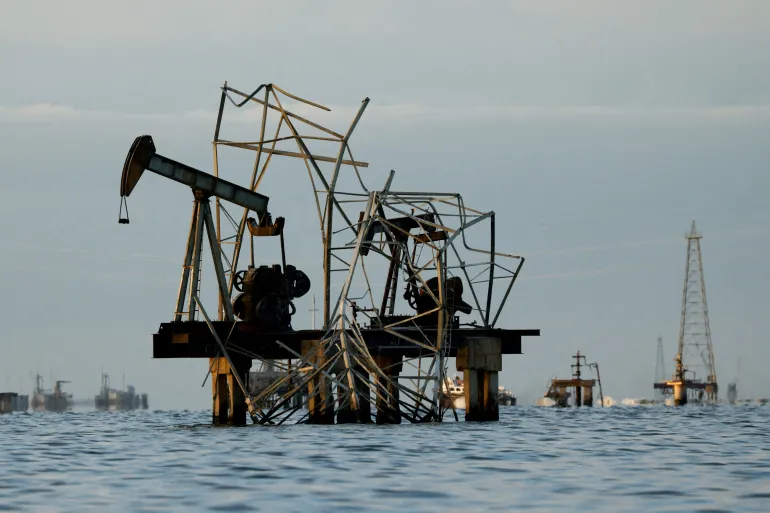
Analysts warn that the deal is unlikely to provide near-term relief for American consumers. While the partnership may improve long-term market sentiment, Rauball noted that physical bottlenecks and aging infrastructure in Venezuela will delay any meaningful production ramp-up for years. Furthermore, US refineries are already operating at maximum capacity to satisfy both domestic and international demand, leaving little room to process additional crude into gasoline or diesel.
Tracy Shuchart, a senior economist at NinjaTrader, emphasized that the current production gains in Venezuela—which have risen from roughly 1 million to 1.2 million bpd—are largely the result of Chevron ramping up existing wells rather than the development of new infrastructure. Shuchart cautioned that the market should not expect a sudden flood of cheap oil.
Industry experts also point to broader economic factors. Energy analyst Schneider noted that the high-price environment caused by the ongoing conflict has already suppressed demand, putting downward pressure on WTI. Given the high level of uncertainty regarding future demand and the potential for Gulf oil to return to the market, many companies remain hesitant to commit significant capital to a high-risk environment like Venezuela. Consequently, while the deal represents a major shift in energy policy, its impact on the cost of fuel at the pump remains uncertain. The report also notes that sour crude and extracting and refining it is costly, but the country’s oil is heavy. The report also notes that the US will be guaranteed a right to buy 20 percent of the output at cost. The report also notes that while his vice president, Rodriguez, was left as interim leader, maduro was flown to the US to stand trial on guns-and-drugs charges. The report also notes that she has since facilitated US access to Venezuela’s oil industry and the US has lifted personal sanctions against her. The report also notes that a senior crude oil analyst at Kpler, the global trade intelligence agency, noted that before Washington’s agreement with Caracas, US West Texas Intermediate (WTI) crude was trading about $83-$86 per barrel, while Brent crude – the global benchmark for oil prices – was hovering between $85-$88 per barrel, johannes Rauball. The report also notes that “Since then, prices have moved even higher – with WTI pushing past $90 and Brent topping $95 per barrel – driven up primarily by heightened geopolitical risks and acute Middle East supply disruptions around the Strait of Hormuz,” he told. The report also notes that on Thursday morning (06:00 GMT), WTI crude futures had climbed by 61 cents, or 0.7 percent, to $90.83. The report also notes that why aren’t US crude or gas prices coming down.
Source: Al Jazeera