

















































Six months into the conflict with Iran, major US oil corporations have recorded their highest profits since 2022. This financial success stems from a strategy of selling lower volumes of oil at significantly elevated prices. Since the hostilities commenced on February 28, the price of Brent crude has climbed approximately 22 percent, rising from $72 to $88 per barrel.
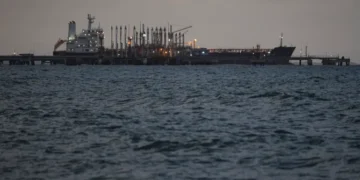
Despite these windfalls, the operational landscape remains precarious. The Strait of Hormuz, a critical maritime artery that previously handled one-fifth of global oil and gas shipments, remains largely inaccessible to commercial traffic. Rahul Choudhary, vice president of Upstream Research at Rystad Energy, notes that the conflict has already forced a reduction in the volume of oil and gas US firms are extracting from the Gulf. Projections suggest that the US share of gas supplies from the region will decline by roughly 40 percent this year, while oil supplies are expected to drop by 30 to 35 percent.
While high commodity prices have effectively buffered the immediate financial impact, prolonged instability threatens to delay major infrastructure projects and hinder future growth. For instance, ExxonMobil’s $10 billion Upper Zakum and Qatar LNG expansion initiatives face potential setbacks. Similarly, ConocoPhillips, which partnered with QatarEnergy in 2022 for the North Field East and North Field South projects, is navigating risks associated with its investments in volatile markets, including a planned 42-percent stake in BP’s Kirkuk operations in Iraq.
The impact on individual companies varies significantly based on their regional exposure. Chevron, for example, maintains limited exposure to Gulf supply disruptions, with the region accounting for only 5 percent of its global output. This helped the group report $12 billion in adjusted earnings on July 31, its highest quarterly profit in six years. Conversely, ExxonMobil has faced greater challenges due to the closure of the Strait of Hormuz and attacks on infrastructure in Qatar and the UAE. The company’s upstream earnings in the first half of 2026 fell by approximately $1.3 billion compared to the same period in 2025, though this shortfall was largely offset by the broader rise in commodity prices.
The outlook for oilfield service providers is equally complex. According to Chinmayi Teggi, an energy research analyst at Rystad Energy, the so-called “Big Three”—SLB, Baker Hughes, and Halliburton—are seeing the conflict weigh heavily on regional revenues. These firms reported that second-quarter Middle East revenues were down 8 to 10 percent compared to the previous year. However, analysts suggest that a recovery in suspended operations could drive growth into 2027.
US firms maintain strategic positions in the Gulf through joint ventures, production agreements, and refining projects, despite the dominance of state-owned entities like Saudi Aramco, ADNOC, and QatarEnergy. Occidental Petroleum, for instance, has established itself as a major foreign producer in Oman, where it operates the Mukhaizna heavy oilfield. Meanwhile, Chevron continues to operate assets in the Saudi-Kuwait Partitioned Neutral Zone through Saudi Arabian Chevron.
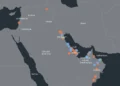
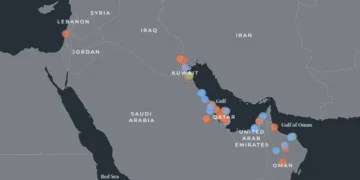
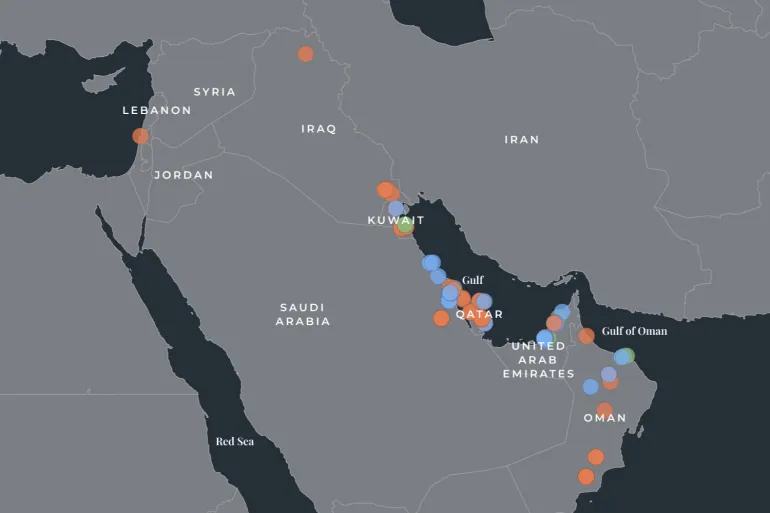
The physical threat to these assets is substantial. Data from the Armed Conflict Location and Event Data (ACLED) project indicates that Iran and its regional proxies have conducted numerous strikes on energy infrastructure. Nearly half of all such attacks—48 percent—have targeted oil and gas facilities, power plants, or desalination units. The UAE, Kuwait, and Bahrain have experienced the highest frequency of successful strikes.
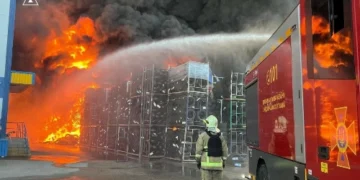
Specific incidents include drone attacks on Kuwait’s Mina Abdullah and Mina al-Ahmadi refineries, the Bahrain Petroleum Company refinery, and ADNOC’s al-Ruwais facility. Saudi Aramco has also been a frequent target, most recently suffering a drone strike on July 27 at the Abqaiq processing complex, a critical node in the global supply chain. In March, a similar attack near the Saudi Aramco-ExxonMobil SAMREF refinery in Yanbu temporarily disrupted loading at the city’s Red Sea port.
Nasser Khdour, Middle East assistant research manager at ACLED, warns that energy and utility infrastructure will likely remain primary targets for the duration of the conflict. While companies like Chevron and Occidental Petroleum, which operate in relatively stable environments like Israel and Oman, have faced less severe disruption, the overall outlook remains tied to the extent of a company’s regional footprint. As ConocoPhillips explores alternative routes to export Iraqi crude to the Mediterranean to bypass the Strait of Hormuz, the industry continues to adapt to a landscape defined by both high prices and high risk. The report also notes that exposing the industry’s uneasy balance between wartime gains and mounting geopolitical vulnerability for investors worldwide, but the conflict is also putting their longstanding Gulf investments at risk. The report also notes that leaving longer-term security and management arrangements unresolved, iran says the strait will not fully reopen until the United States fulfils its commitments under a lapsed interim peace deal. The report also notes that exxonMobil, by contrast, has been far more exposed to disruption in the Middle East, with the closure of the Strait of Hormuz and Iranian attacks on US-linked infrastructure in the region affecting its operations in Qatar and the United Arab Emirates (UAE), which together account for 20 percent of its global equity upstream supply, according to Choudhary. The report also notes that the world’s largest natural gas field, which Qatar shares with Iran, where it is known as South Pars, the field is the Qatari section of the North Field-South Pars structure. The report also notes that similarly, ConocoPhillips joined the North Field East (NFE) and North Field South (NFS) expansion projects with QatarEnergy in 2022 to increase export capacity at Ras Laffan. The report also notes that a US-registered independent conflict monitor, Iran and Iran-backed groups in the region have carried out at least 172 attacks on nonmilitary infrastructure across the six Gulf Cooperation Council (GCC) countries since the US and Israel launched their war on February 28, according to the Armed Conflict Location and Event Data (ACLED). The report also notes that in June, an explosion as a result of a “ technical malfunction ” on Qatar’s Barzan gas project, where ExxonMobil holds a stake, killed at least 13 people.
Source: Al Jazeera