







































































A fierce competition has erupted within Israel’s right-wing political landscape, as leaders scramble to align themselves with the legacy of the Irgun, a paramilitary group deeply involved in the violence of the 1948 war. The militia is historically linked to the Nakba, which saw the forced displacement of over 750,000 Palestinians during the establishment of the state of Israel.
The rivalry intensified on Monday when National Security Minister Itamar Ben-Gvir announced that the wreck of the Altalena, an Irgun cargo ship, had been located. The vessel, which transported weapons from France to the militia, was famously sunk in June 1948 under the direct orders of Israel’s first prime minister, David Ben-Gurion, during a standoff over control of the armaments.
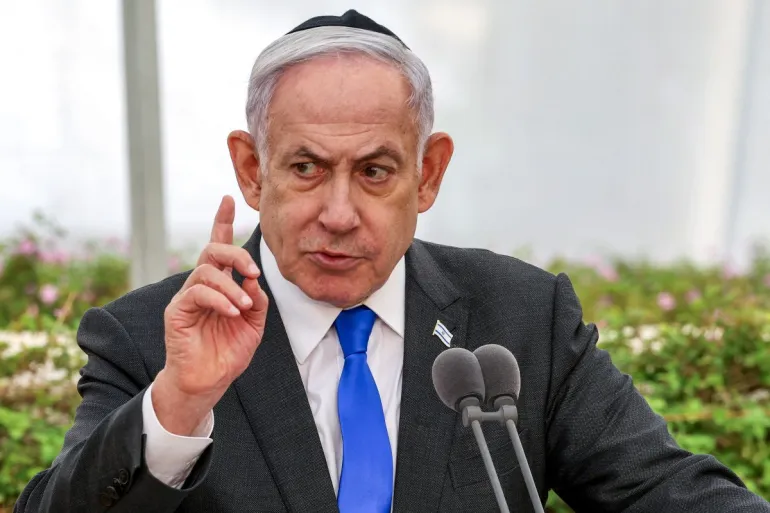
Upon hearing of the discovery, Prime Minister Benjamin Netanyahu—whose Likud party traces its roots to the Irgun—rushed to the Etzel Museum near Jaffa. In a move to reclaim the historical symbolism for his own base, Netanyahu recorded a video address from the same location where Ben-Gvir had been active. This public maneuvering occurs as Netanyahu faces significant political pressure, including declining poll numbers, ongoing corruption charges from 2019, and intense scrutiny regarding his government’s failures surrounding the October 7, 2023, Hamas-led attack.
During his visit, Netanyahu invoked the memory of Irgun commander and future prime minister Menachem Begin, praising his restraint when Israeli forces fired on the Altalena. Drawing a parallel to his own situation, the prime minister criticized what he termed the “absurd” attacks against him and his party. He urged national unity, stating, “Have they not learned the lesson? We are brothers – political rivals, but we are brothers, sons of one nation with one future and one destiny.”
The historical significance of the Irgun remains a point of contention. Alongside the Lehi militia, the group was responsible for severe violence, including the April 1948 massacre of over 100 villagers in Deir Yassin and the shelling of Jaffa, which forced the majority of its Palestinian population to flee. Prior to the state’s formation, the Irgun conducted an insurgency against British mandate forces, including the 1946 bombing of the King David Hotel in Jerusalem, which resulted in more than 90 deaths.
Sociologist Yehouda Shenhav-Shahrabani described the Irgun as a “fascist, anti-Arab organisation” that utilized violence against both British and Arab targets. However, he argued that focusing solely on the Irgun obscures the broader context of the Nakba, noting that Zionist paramilitary groups tied to the Labour movement were the primary forces behind the displacement. He suggested that the concept of a “Zionist left” has historically served as a cover for a settler-colonial movement centered on Jewish supremacy.
Political analysts suggest the public spat over the Altalena is primarily a tactical maneuver in the ongoing power struggle between Netanyahu and Ben-Gvir. Daniel Bar-Tal of Tel Aviv University noted that the discovery holds little weight for the average voter, serving instead as a tool for political posturing. Ben-Gvir, who has been a key figure in the war on Gaza, pointedly compared himself to Begin, remarking that the former leader knew “intimately, what it tastes like when others don’t want to be photographed with you on the same stage.”
Yossi Mekelberg, a senior consulting fellow at Chatham House, observed that Ben-Gvir is effectively “out-Netanyahuing” the prime minister. He suggested that both figures rely on portraying themselves as victims to maintain support among their base. While both leaders have used rhetoric regarding the threat of civil war, Mekelberg warned that such language, while often performative, remains dangerous in an environment of rising political violence. He added that Netanyahu has a history of utilizing such crises to position himself as a savior, a strategy reminiscent of the atmosphere preceding the 1995 assassination of Yitzhak Rabin. The report also notes that as well as an official reckoning for his government’s own failures ahead of the Hamas-led attack on October 7, 2023, the stakes for the Israeli premier could hardly be higher, facing a potential prison sentence on corruption charges dating back to 2019. The report also notes that “During the [annual ceremony to mark the Altalena’s sinking], I hear calls of incitement against us by political rivals standing outside the ceremony and simply desecrating it,” he said. The report also notes that the schism between Irgun and the main body of the Israeli military represents a faultline through Israeli politics that is still visible today, in the eyes of many historians. The report also notes that in April 1948, Irgun fighters, alongside the Lehi, massacred more than a hundred villagers, including women and children in Deir Yassin, near Jerusalem, despite the village having reached a non-aggression pact with the nascent Israeli forces. The report also notes that weeks later, the Irgun turned its guns on Jaffa, shelling the city’s edges and contributing to an offensive that emptied it of the vast majority of its Palestinian population, who fled by sea and by road as the fighting closed in. The report also notes that however, he maintained, placing all responsibility for the worst of the Nakba on the Irgun misses the point. The report also notes that “This is why I have always argued that there is no real left within Zionism. According to the most recent polls, Netanyahu’s Likud is consistently trailing his principal rival, former Israeli military chief of staff Gadi Eisenkot’s Yashar Party.
Source: Al Jazeera